
Overview
This course provides a overview on the maintenance and care for mudflaps on tractors and trailers for carriers and drivers.
Time
This course will take approximately 10 minutes to complete.
Navigating This Course
This course is mobile friendly. You can take it on your phone or on a computer. Select the cards below for tips on taking this course on your phone.
Click the magnifying glass icon (+) to zoom in and click again to return to normal size.
When you see a "CONTINUE" button, select it to unlock the next section of the course.
Rotate your phone for better access to course content.
Mudflaps
Mudflap is a flap that hangs behind the wheel of a vehicle. It is designed to prevent water, mud, and stones thrown up from the road from hitting the bodywork of the vehicle or any following vehicles.
To continue, check each box to confirm you have read each important key takeaway below.
General guidelines: To be on the safe side, it is recommended that your mud flaps don’t hang more than 6 inches from the ground.
Press the (+) icon to view more about rules and regulations.
Per FMCSA: Missing or defective mud flaps are considered a driving violation under eCFR 392.2
In Texas, Arizona, Delaware, and Missouri, your mudflaps should be no more than 8 inches from the ground.
If you’re driving through Alaska, your mudflaps only need to hang 14 inches from the surface of the ground.
Maryland requires that mudflaps extend from the truck to the ground the same length as the tire’s width. For example, if the tire is 12 inches wide, the mudflap should be 12 inches long.
While some states are more lenient, others have more strict guidelines. In Michigan, Oklahoma and Pennsylvania mudflaps must prevent debris from leaving the tire at a minimum 22.5-degree tangent angle.
Last but not least, New York law states that your mud flap can’t be more than 1/3 of the distance from where the bottom of the mud flap makes contact with the back wheel.
Common Mudflap Issues
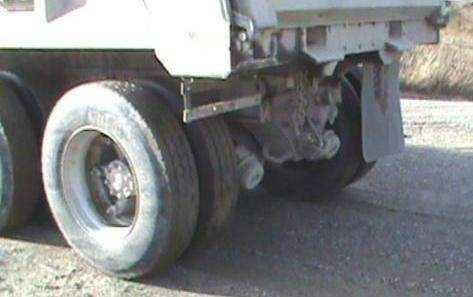
Missing Mudflaps
The most common issue with mud flaps is that they get pulled off of the tractor or trailer. It is required for Tractor and trailers to have mud flaps on at all times to prevent any injuries or issues.
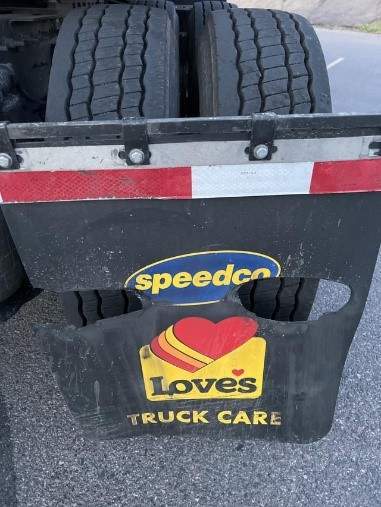
Worn Down Mudflap
Another common issue is that mudflaps get worn down over time. Please see an example of worn down mudflap.
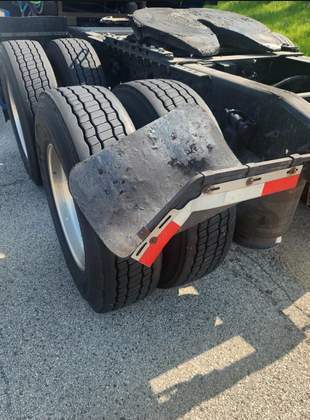
Incorrect Installation
Installing mudflaps too tight or too lose or using inadequate screws won’t protect trucks effectively.
Inspecting Mudflaps
Visual Inspection
Teaching how to visually inspect mudflaps for damage and wear.
To continue, check each box to confirm you have read each important key takeaway for visually inspecting mudflaps.
Functional Inspection
Explaining how to check if mudflaps are functioning as intended.
Press the (+) icon to view how to check mudflaps.
Use a measuring tape to check the distance between the bottom of the mudflap and the ground. Ensure it meets the legal requirements in your area.
Confirm that the mudflap is at the appropriate angle to effectively deflect debris away from other vehicles. Again, refer to your truck’s manual for guidance.
Gently push the mudflap to check its flexibility. It should have some give but not be overly loose.
Stand back and visually inspect the mudflap while considering the coverage it provides. Make sure it adequately protects against debris and splashing.
If your mudflaps have anti-sail brackets (to prevent flapping at high speeds), ensure they are functioning correctly.
Verify that the mudflap is securely mounted to the truck and that all brackets and fasteners are in place.
Take notes on the functional check results. If you notice any issues that affect the mudflap’s performance, these should be addressed promptly.
Choosing the Right Mud Flaps
Tips for selecting the appropriate mudflaps for different conditions.
- Know Your Needs: Consider the type of driving you do. Are you often on gravel roads, highways, or in snowy conditions? Different mudflaps are designed for various environments.
- Check Legal Requirements: Research the specific mudflap requirements in your region. Ensure the mudflaps you choose comply with these regulations regarding size, material, and positioning.
- Quality Matters: Invest in high-quality mudflaps made from durable materials. They may cost a bit more upfront, but they’ll save you money in the long run by lasting longer.
- Anti-Spray Features: Look for mudflaps with anti-spray features designed to minimize the amount of water and debris thrown onto other vehicles.
- Easy Installation: If you’re replacing mudflaps yourself, consider ones that come with easy-to-follow installation instructions and the necessary mounting hardware.
- Brand Reputation: Research reputable brands known for producing reliable and effective mudflaps.
- Maintenance Considerations: Some mudflaps require more maintenance than others. Consider your willingness and ability to perform regular upkeep.
Preventative Maintenance
Cleaning and Maintenance Tips
Advice on cleaning and maintaining mudflaps to extend their lifespan.
Press the arrow or numbers below to learn about cleaning and maintaining mudflaps.
Extending Mudflap Lifespan
Practices that prolong the longevity of mudflaps.
- Adjust Driving Habits: Be mindful of your driving habits. Avoid rough or aggressive driving, as it can put additional stress on your mudflaps.
- Maintain Safe Following Distances: Keep a safe following distance behind other vehicles to reduce the impact of debris and road spray on your mudflaps.
- Watch for Low-Hanging Objects: Pay attention to road conditions and obstacles, especially low-hanging objects that could potentially damage your mudflaps.
- Avoid High Speeds on Rough Roads: Reduce your speed when driving on rough or gravel roads. Higher speeds can cause more significant wear and tear on mudflaps.
- Regularly Inspect and Clean: Stick to a routine of inspecting and cleaning your mudflaps. Prevention is key to extending their lifespan.
- Replace Promptly: If you notice significant damage or wear during your inspections, don’t delay in replacing the mudflaps. Prompt replacement can prevent further damage to your truck and other vehicles on the road.
- Consider Mudflap Accessories: Some accessories, such as mudflap weights or hangers, can help stabilize and protect mudflaps from damage caused by wind or debris.
- Stay Informed: Keep up with industry knowledge and updates regarding mudflap materials and technologies that may offer longer lifespan and improved performance.
Frequently Asked Questions
FAQs
How often should I inspect my mudflaps?
Regular visual inspections are recommended, ideally before each trip and as part of your routine maintenance checks.
What are anti-sail brackets, and do I need them on my mudflaps?
Anti-sail brackets are designed to prevent mudflaps from flapping at high speeds. Whether you need them depends on your driving conditions. If you frequently drive at high speeds, they can be beneficial.
How can I find out the specific mudflap regulations in my area?
Contact local transportation authorities or refer to your region’s traffic regulations. Online resources and forums for truckers can also provide valuable insights.
Can I replace mudflaps myself, or should I have a professional do it?
If you’re comfortable with basic maintenance tasks and have the necessary tools, you can replace mudflaps yourself. However, if you’re unsure, it’s always a good idea to seek professional assistance.
Are there eco-friendly mudflap options available?
Yes, some mudflaps are made from recycled materials or designed to be more environmentally friendly. Check with manufacturers for eco-conscious options.