Amazon-branded equipment may differ from carrier-owned or rented equipment. These differences can include trailer lights and landing gear. Reviewing the differences in Amazon-branded equipment should be included in every pre-trip and post-trip inspection.
This course will take approximately 10 minutes to complete.
This course is mobile friendly. You can take it on your phone or on a computer. Select the cards below for tips on taking this course on your phone.
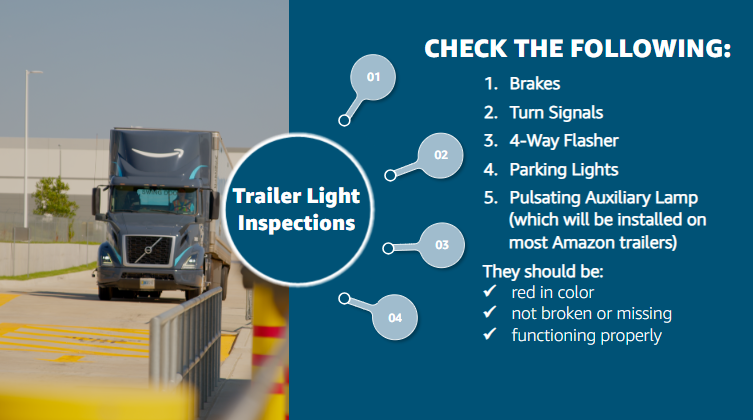
Trailer lights are a critical safety component for any commercial vehicle. Ensuring the proper functioning of trailer lights is essential for the visibility and signaling needed to operate safely on the road. During your pre- and post-trip inspections, carefully reviewing the trailer lights is a must. Proper trailer light inspection is not only a compliance requirement, but also a key safeguard for protecting yourself, your cargo, and other motorists on the road.

Note: Lights are LED lights and one or a small number of bulbs being burnt out does not mean the trailer is not road worthy. The light needs to still be visible in normal daylight hours at 500 feet.
The landing gear on a trailer is a crucial component that also deserves close attention during your pre- and post-trip inspections. This equipment plays a vital role in safely supporting and stabilizing the trailer when it is disconnected from the tractor. Ensuring the proper functioning of the landing gear is essential for loading, unloading, and parking the trailer.
Proper landing gear inspection is not only a compliance requirement, but also a safeguard against potential accidents and damages. Paying close attention to this can help prevent costly breakdowns and keep your company’s operations running smoothly.
The landing gear mechanism on AZNG trailers has two speeds: high and low gear.
High gear can be used by pulling out on the shaft. It is typically used when a trailer is not under load.
Low gear is accessed by pushing in at the shaft and is typically used when the landing gear is under load.
Defects to look for are:
It’s important to note that rust is common in equipment, and more prevalent in some markets (East coast). Not all rust is prohibitive to functionality of equipment. Surface rust is ok and considered a cosmetic issue, but deep rust that has holes or cuts into the component can be escalated to an Amazon associate for action.
If any defects are found during inspection, note them on the Driver’s Vehicle Inspection Report (DVIR). For issues that are cosmetic and do not compromise the vehicle’s operation, the defect should be annotated, and the trip should be made. If the vehicle’s operation may be compromised by the defect, alert a yard associate.
Download and review the DVIR inspection resources listed below:
Drivers Vehicle Inspection Report (DVIR).pdf
Minimum Periodic Inspection Standards Appendix A to Part 396, Title 49.pdf