
In this course, you will learn why and how Amazon uses the Relay Performance Score and Grade to deliver loads safely and on time. Your Relay Performance Score (RPS) is measured as the lowest of four metrics: On Time, Acceptance, App Usage, and Disruption Free. Carriers with a high performance score and grade receive priority to secure early access to book loads or contracts.
This course will take approximately 10 minutes to complete.
This course is mobile friendly. You can take it on your phone or on a computer. Select the cards below for tips on taking this course on your phone.
Before progressing further, we will take a moment to define each of the metrics used to calculate your Relay Performance Score.
Press the (+) icons below to learn more about each of these metrics.
On Time measures how well your company executes loads which arrive by the scheduled arrival time. This score is one of the ways Amazon makes sure our customer expectations are being met.
Acceptance measures the rate of acceptance of tendered work for Amazon and is negatively impacted any time you reject Amazon-tendered work.
Note: Tendered work that is rejected or expires is considered a rejection and will negatively impact Acceptance scores.
App Usage measures how well the driver uses the Relay Mobile app to ensure location availability and app events completion. App events completion for a driver consists of the following events:
Check in at origin
Attach trailer (not applicable to box trucks or bobtails)
Depart at origin
Arrive at destination
Location Availability will be measured starting 15 minutes before first check-in at the origin, and until check-in is completed at the final destination. Please advise your company’s drivers to:
Keep the app running for the entire duration of their trips while hauling Amazon loads. For team loads, both the drivers should keep the Relay Mobile app running throughout the trip.
Dispatch within the Relay mobile app at least 15 minutes before the first check-in at the origin site to ensure their location can be measured.
Not close the app until check-in at the final destination site is complete.
Disruption Free measures the rate at which you execute loads without any interruption. We track two types of disruptions: driver not assigned and trailer not moving.
A driver not assigned disruption occurs when carriers fail to assign drivers within five hours of the scheduled arrival time.
A trailer not moving disruption occurs when the trailer’s stationary time exceeds the built-in threshold of allotted time for driver breaks.
If a load is accepted within 5 hours of execution time, your company will have a 30-minute grace period to assign drivers to accepted loads without a negative impact to your Disruption Free metric.
Note: Your company’s Performance Score will equal your lowest score of the above four performance metrics (calculated by last six active weeks).
For example, your company’s On Time Score is 90%, App Usage is 95%, Acceptance is 98% and Disruption Free is 92%. Your company’s Performance Score will be equal to 90%. Your company is eligible for a Performance Score after executing ten or more loads in the last six active weeks.
Amazon is constantly innovating to exceed customer expectations. Performance Scores and Grades are used to make sure Amazon and carriers raise the bar on performance expectations by ensuring loads are delivered safely and on time.
Carriers with high Performance Scores and Grades receive priority to secure early access on the Relay Load Board and book contracts. Four different metrics are used to calculate your RPS – On Time, Acceptance, App Usage, and Disruption Free.
After executing ten or more loads in the last six active weeks, your company is considered for Performance Score evaluation. If a Performance Grade or Score is not shown in your account, you are not yet eligible.
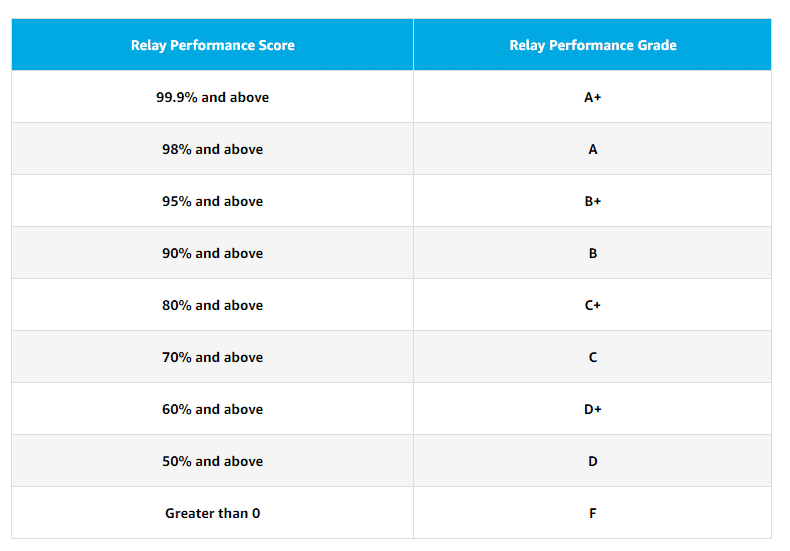
It is important to understand precisely how these metrics are calculated to avoid any negative impact to your Performance Grade or Score. For more information, refer to the Support Center of your company’s Relay account.
NOTE: RPS grades are calculated based on loads execution over the last six active weeks within a one-year timeframe. An active week is a week where your company has executed or rejected at least one load. In practice, once a company earns an RPS grade, the grade will be retained for up to a year even if they do not execute any additional loads.
The On-Time metric is weighted out using two categories: On Time to Origin and On Time to Destination. The scores are evaluated by arrival time and penalized loads. It is calculated using two formulas:
1) Arrival time. This determines if there was a delay, and if so, what penalty is appropriate.
2) Penalized loads compared to total loads. This takes the total penalized calculations and compares it to the all executed loads.
Below, you will see a chart that shows the penalties over time for different delays.
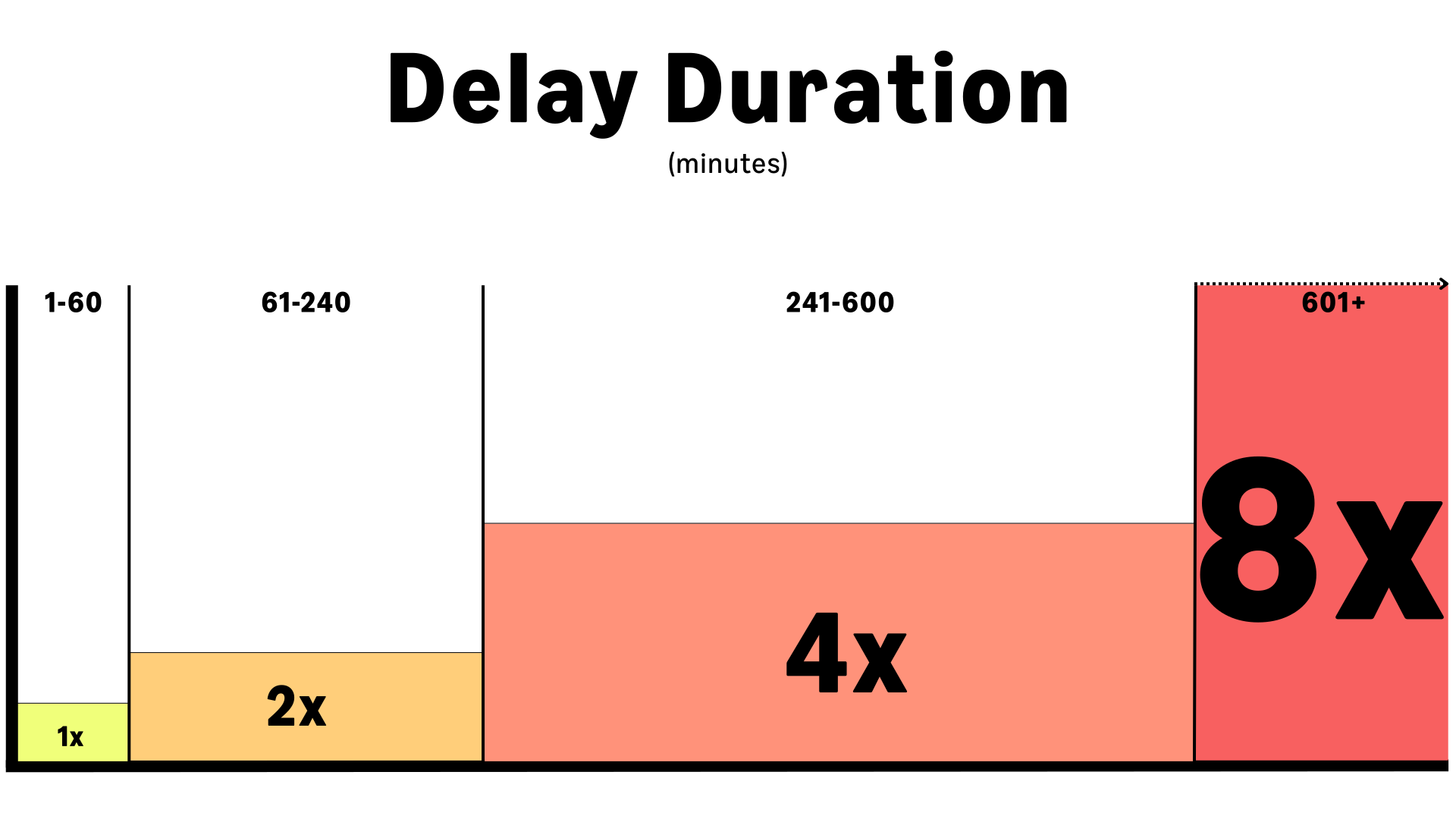
Note: “Loads” below refers to the all tendered work types: Loads, Block, and Contracts.Then, these scores are evaluated into the overall time using the weights of the On Time to Origin (OTO) and On Time to Destination (OTD).
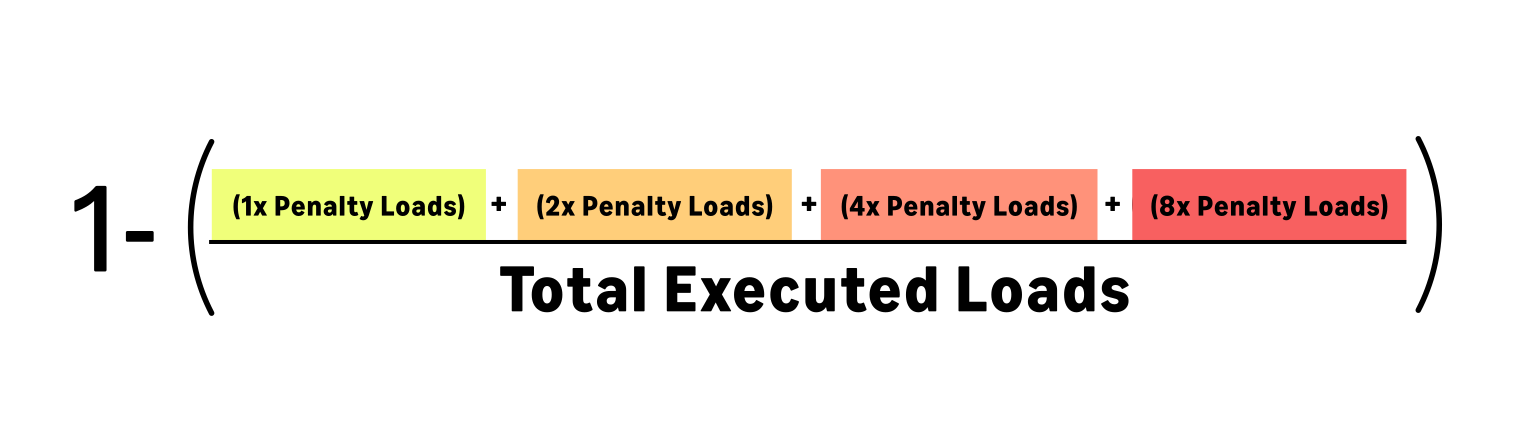
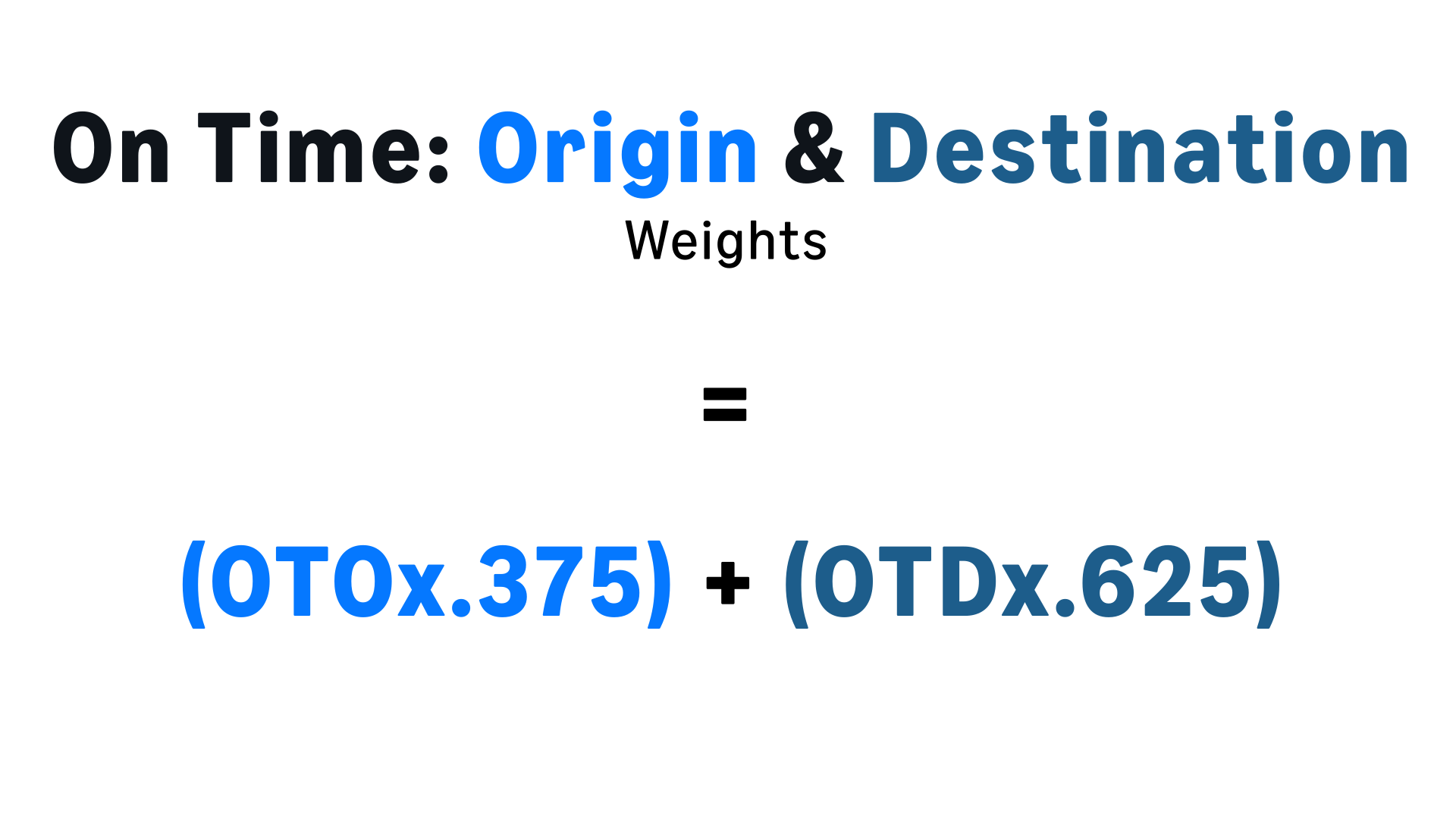
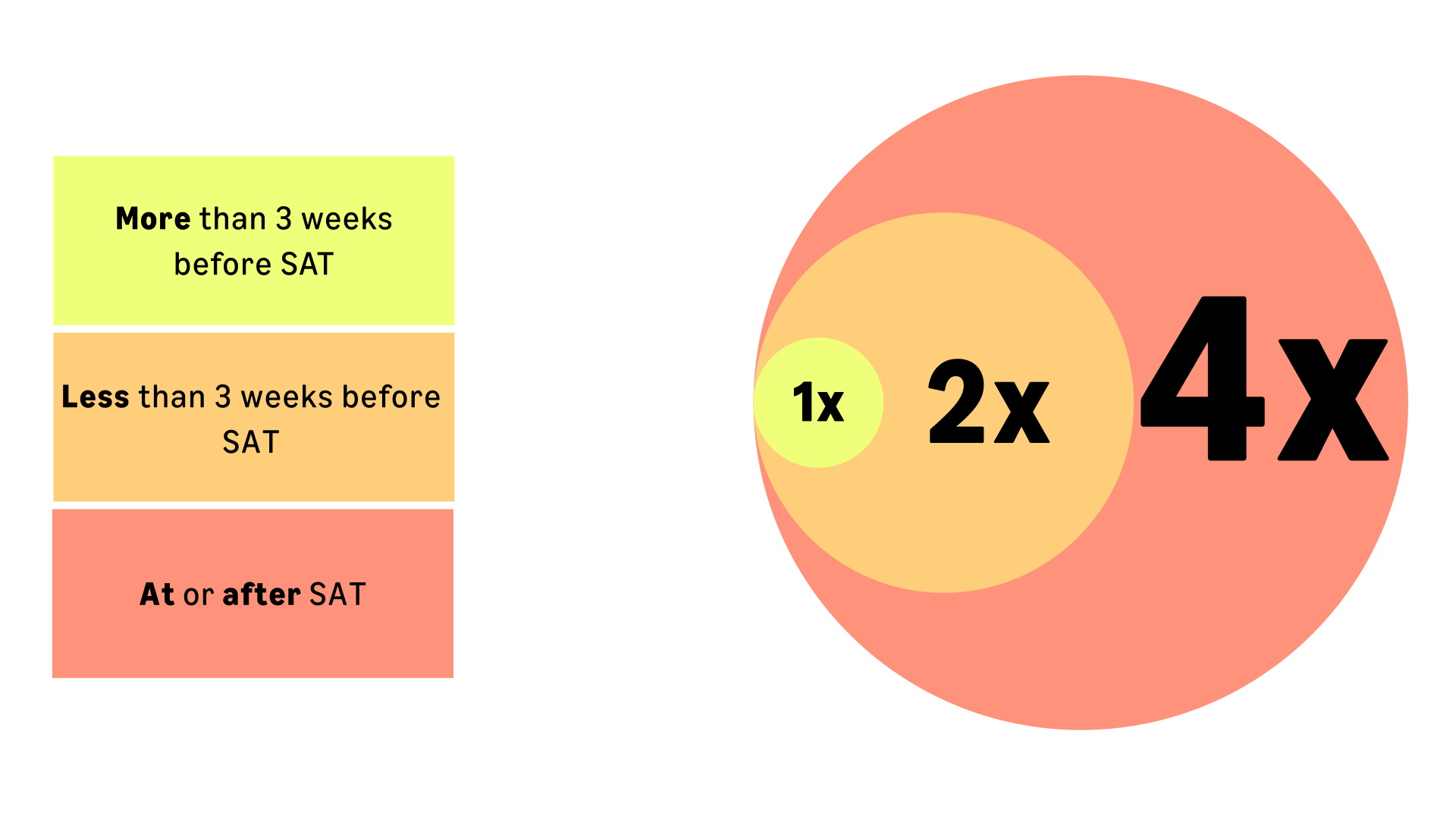
Impact to your company’s Acceptance Score increases as the time approaches Scheduled Arrival Time (SAT). When you reject a load, there is an impact depending on the work type and timing.
Below, you can find the impact to your company’s Acceptance Score based on work type.
Load Level
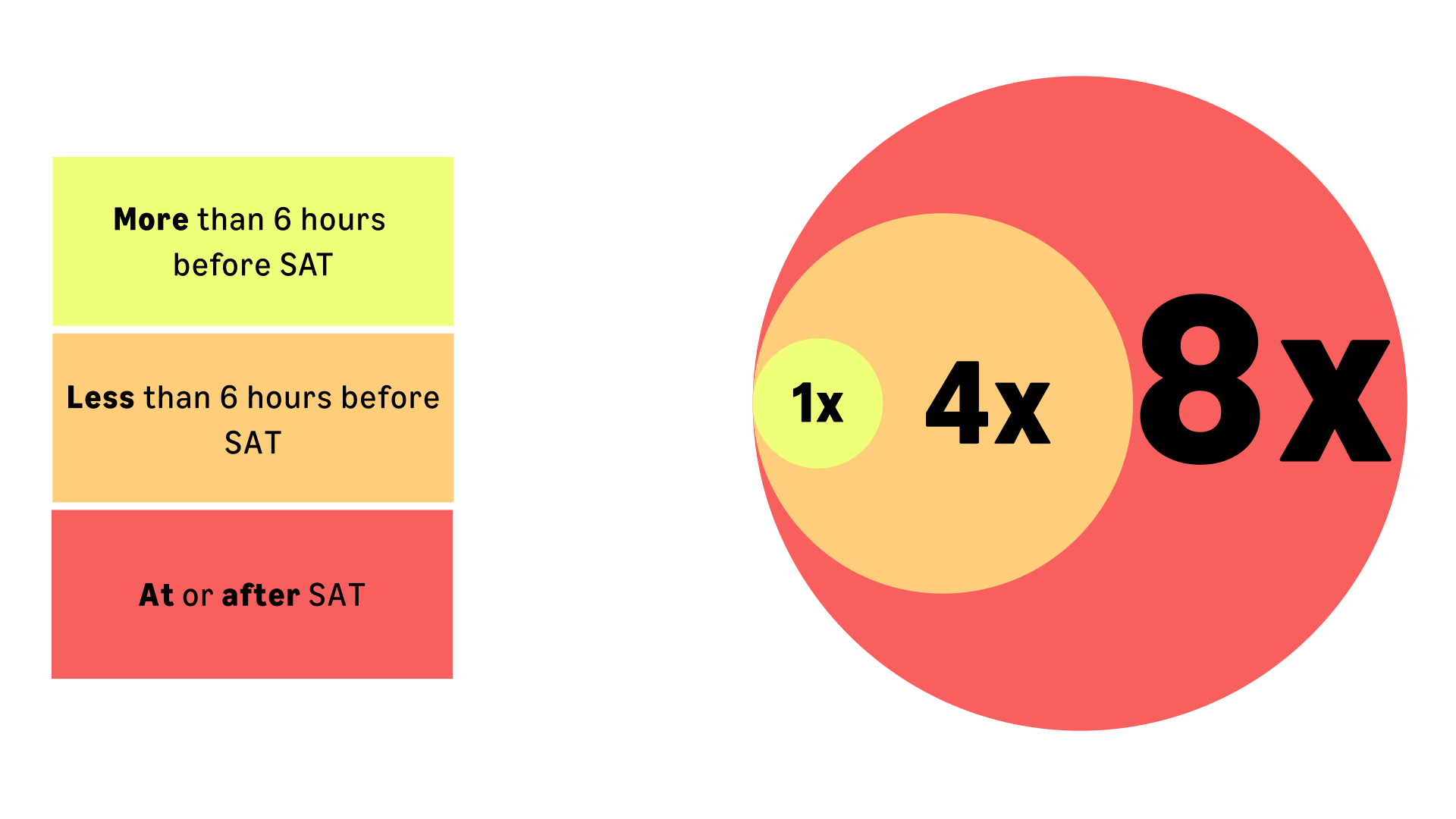
Block
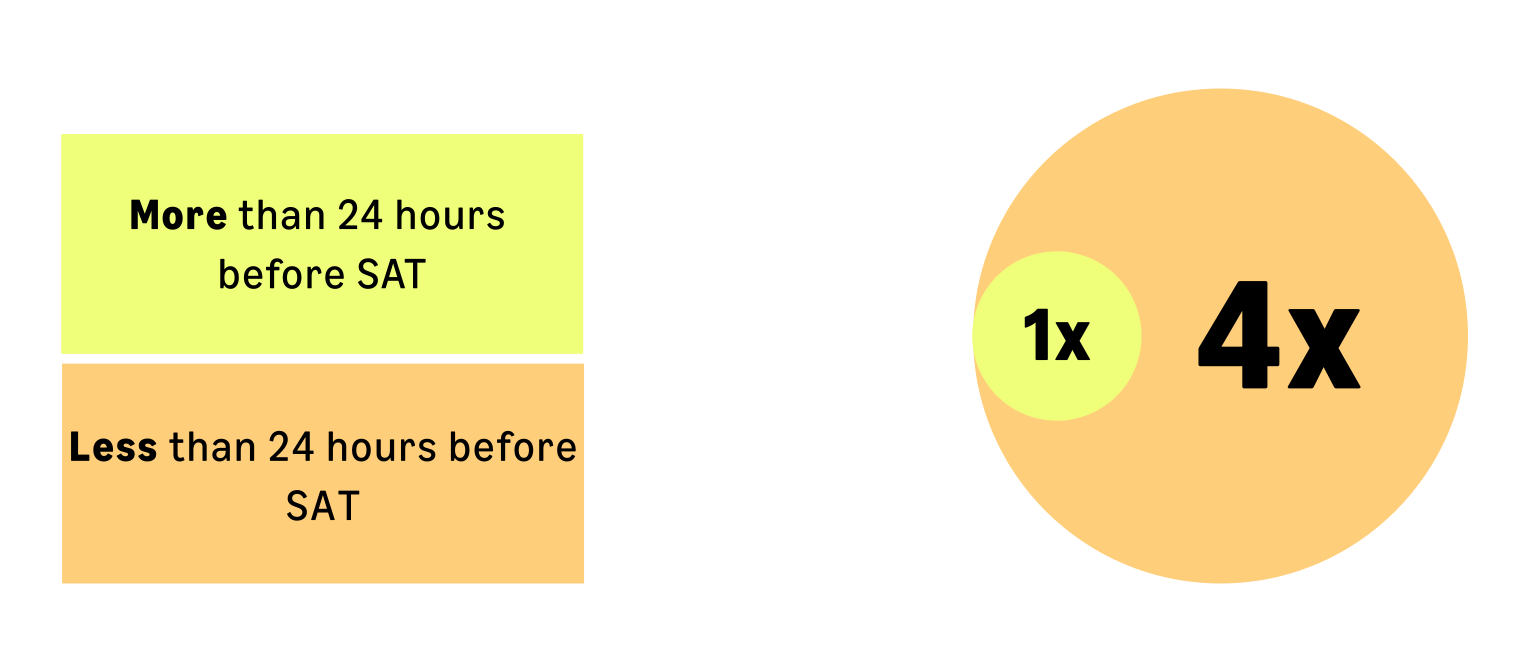
Contracts
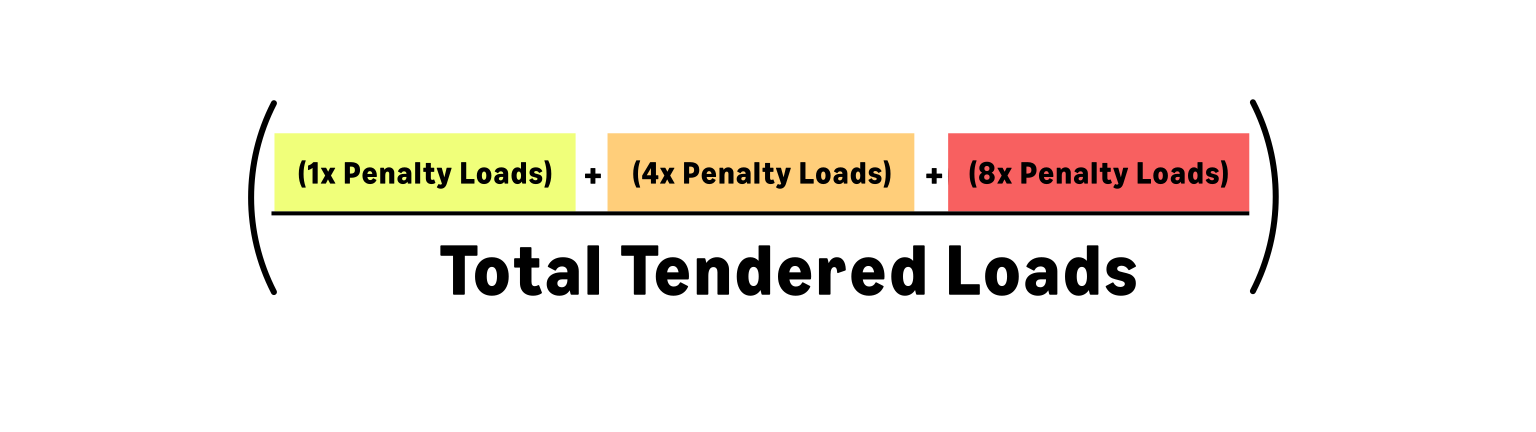
Below, you will see the formula for rejections. Calculating rejections is an integral part of the Acceptance formula.
We calculate Disruption Free as the ratio of loads with no disruption vs. the total number of executed loads.
Below, you can find the formula.

Want to learn more? Press the buttons below to view the different resources available.
Location Availability for Relay Mobile App – US & CA
This course walks through how to activate location services in the Relay mobile app for both Android and iPhone. It also describes best practices for using location services and why it is important to follow these best practices.
You will learn what the Disruption-Free Metric is, how it is calculated, and why it is important to our customers.
This course will cover What is the On Time metric, Why we measure On Time performance, and explain how we calculate the On Time metric score.