
Overview
This course provides maintenance tips for different fluids used in vehicles including Engine Oil, Diesel Fuel, Coolant, Transmission Fluid, and Diesel Exhaust Fluid.
Preventative Maintenance enables drivers to operate their vehicle safely and avoid unplanned maintenance delays.
Time
This course will take approximately 10 minutes to complete.
Navigating This Course
This course is mobile friendly. You can take it on your phone or on a computer. Select the cards below for tips on taking this course on your phone.
Click the magnifying glass icon (+) to zoom in and click again to return to normal size.
When you see a "CONTINUE" button, select it to unlock the next section of the course.
Rotate your phone for better access to course content.
Engine Oil
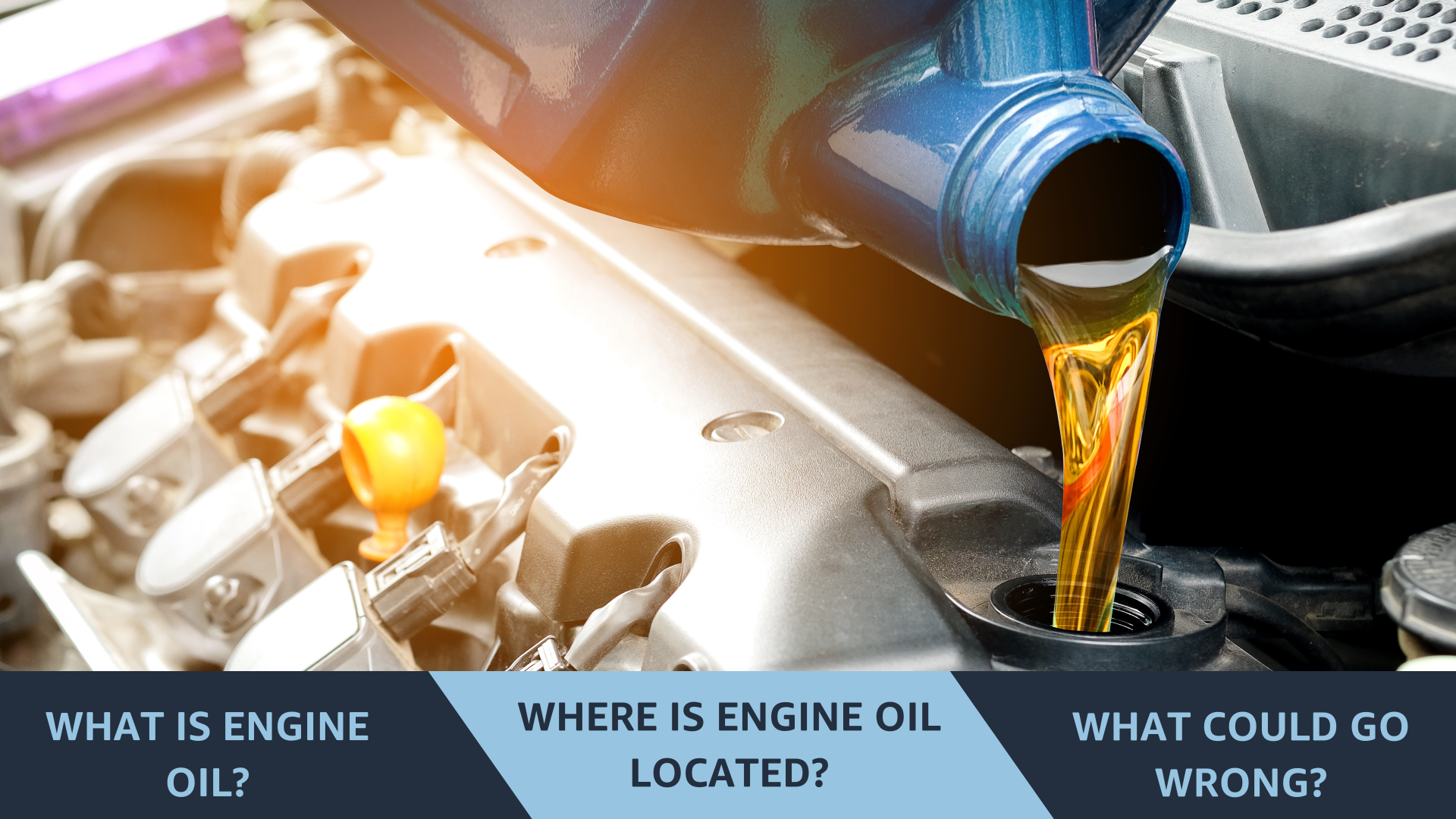
Engine Oil is a critical fluid within your vehicle that keeps your engine running properly.
Press each (+) marker to briefly learn about engine oil.
Maintenance
There are several considerations to account for when it comes to maintaining the fuel filters on your vehicle.
Press the (+) icon to view the best practices for maintaining your fuel filters.
Using the right engine oil ensures that your engine operates smoothly and efficiently. Furthermore, it limits damage to engine parts that may manifest as catastrophic engine failure over time.
Additionally, use the manufacturer’s recommended viscosity grade when choosing your motor oil. The viscosity grade is denoted by two numbers, with the first number before the “W” (for “Winter”) indicating how the oil flows when cold, and the second number representing how it flows at normal engine operating temperatures.
For colder climates, it is recommended to use a motor oil with a lower “W” number.
Frequent changes flush abrasive dirt and metal particles out of the engine, prolonging its life. Delaying oil changes can harm your vehicle’s engine and over time even lead to engine failure. Regularly changing your engine oil is one of the most effective ways to ensure your vehicle does not have issues on the road. Additionally, consider the following:
- Most owner’s manuals recommend a more frequent interval for “severe conditions”.
- To maximize the life of your engine, follow the severe conditions interval recommendations, especially if you drive regularly in stop-and-go traffic.
Try using synthetic engine oil over regular (conventional) engine oil if possible. The consistency and lack of impurities in synthetic oil allows it to last longer, stand up extreme conditions better, and have better flow rates.
Check the level and condition of your engine oil on a regular basis, ideally weekly. Oil can degrade quickly overtime based on vehicle operating conditions. Engine oil can also deplete overtime, needing to be topped off or filled to level again. (Always park at a level place when checking engine oil. If the vehicle was running, make sure to let the engine oil cool a bit before checking. Engine oil becomes hot when your vehicle is in operation.)
- Look at the level of engine oil in relation to the recommended markings on the dipstick. If the level is low, then additional oil will need to be added to bring it to level.
- Avoid overfilling with engine oil. This can cause damage to engine parts.
- Check on the color and condition of the engine oil. The oil should be translucent amber and flow easily. If the oil is very dark black, milky, or had visible particles, then an oil change is in order.
For a comprehensive preventative maintenance program, especially for fleets, implement an Oil Analysis program for your vehicles. Oil analysis is an important tool that can be used to monitor the health of a vehicle’s engine. Oil analysis involves taking a sample of the vehicle’s engine oil and then sending it to a lab for analysis – similar to a blood test conducted by a doctor during a routine checkup. Oil analysis provides valuable information about the health of the engine, lubricant degradation, and the presence of contaminants or wear particles. The results of the oil analysis can indicate any problems in the vehicle before it can lead to catastrophic engine failure. It is an important tool, especially for commercial vehicles, heavy duty trucks, and fleet vehicles, to keep vehicles operational and reduce long term costs associated with engine repair or replacement.
Benefits of Oil Analysis:
- Early detection of problems: Oil analysis can detect early signs of abnormal wear, component failure, or contamination, allowing proactive maintenance and minimizing potential damage.
- Maintenance Optimization: By analyzing the oil’s condition, lubricant change intervals can be optimized, reducing maintenance costs and downtime while ensuring optimal engine protection.
- Trend Monitoring: Regular oil sampling and analysis allow for trend monitoring over time. Changes in oil properties or wear metal concentrations can indicate developing issues or the effectiveness of maintenance actions.
- Equipment Health Assessment: Oil analysis provides insights into the overall health and condition of the engine and its components, helping to guide maintenance decisions and prioritize repairs or replacements.
- Cost Savings: By identifying problems early and optimizing maintenance, engine oil sampling can potentially reduce repair costs, extend equipment life, and improve overall operational efficiency.
Diesel Fuel
Diesel Fuel is a critical fluid within your vehicle that fuels your engine and keeps your vehicle running properly.
Press each (+) marker to learn about diesel fuel.

Maintenance
There are several considerations to account for when it comes to maintaining the oil filters on your vehicle.
Press the (+) icon to view the best practices for maintaining your oil filters.
Make sure you follow your vehicles recommendations and use the right type of diesel fuel. Make sure that the fuel you are using is high-quality and is not dirty.
Over time the fuel filter in your vehicle can get dirty and/or clogged. This can reduce the efficiency and quality of the fuel entering your engine and can ultimately lead to engine failure. Make sure you change all filters regularly and follow your vehicles maintenance guide for fuel filter replacement.
Moisture can condense within the fuel tank and precipitate into the diesel fuel. Water in diesel can not only compromise the quality of the fuel, but can also lead to microbial growth in the diesel. Additionally, water can oxidize steel components in the injection system, leading to failure on the injection components. To avoid this, do not keep diesel fuel stored in your vehicles fuel tank or an outside container for a long time.
Microbial colonies can grow within diesel fuel. Even a little bit of moisture can quickly accelerate the growth of microbes within diesel fuel. Warm weather can also accelerate this growth. Microbial growth will quickly clog up filters and also degrade the quality of the fuel.
To avoid microbial growth, do not store your diesel fuel for long periods of time, either within your fuel tank or an outside container. Additionally, additives such as biocides can be added to the engine oil inside your tank or storage vessel to prohibit microbial growth.
As temperatures decrease, diesel fuel begins to show “gelling” behavior. This means that the diesel fuel begins to stiffen and solid lumps begin to form in the fuel. These solid lumps, or crystallized wax, can cause problems for vehicles and leading to vehicles not being able to run in cold weather. The crystallized wax will clog the fuel filter as fuel lines making it impossible for the vehicle to run. The temperature at which the fuel begins to gel is called the “Cloud Point”.
No.2 Diesel fuel, the most common type used in vehicles, has a cloud point of 14°F (-10°C). This means the fuel begins to gel at around that temperature. However, the fuel can begin to exhibit waxy like behavior at temperatures even up to 32° F (0°C).
No. 1 Diesel fuel, on the other hand, has a cloud point of -40°, significantly lower the No. 2 Diesel Fuel.
To avoid gelling in diesel fuel, cold flow improvers can be added to the diesel fuel in your vehicle.
Another way to avoid gelling of diesel fuel is to add No. 1 diesel fuel to your engine. Mixing No. 1 diesel fuel with No. 2 diesel will reduce the amount of solid wax that forms as temperatures drop.
Additionally, completely switching to No. 1 diesel fuel will avoid the formation of solid wax altogether until temperatures drop to -40°.
Coolant
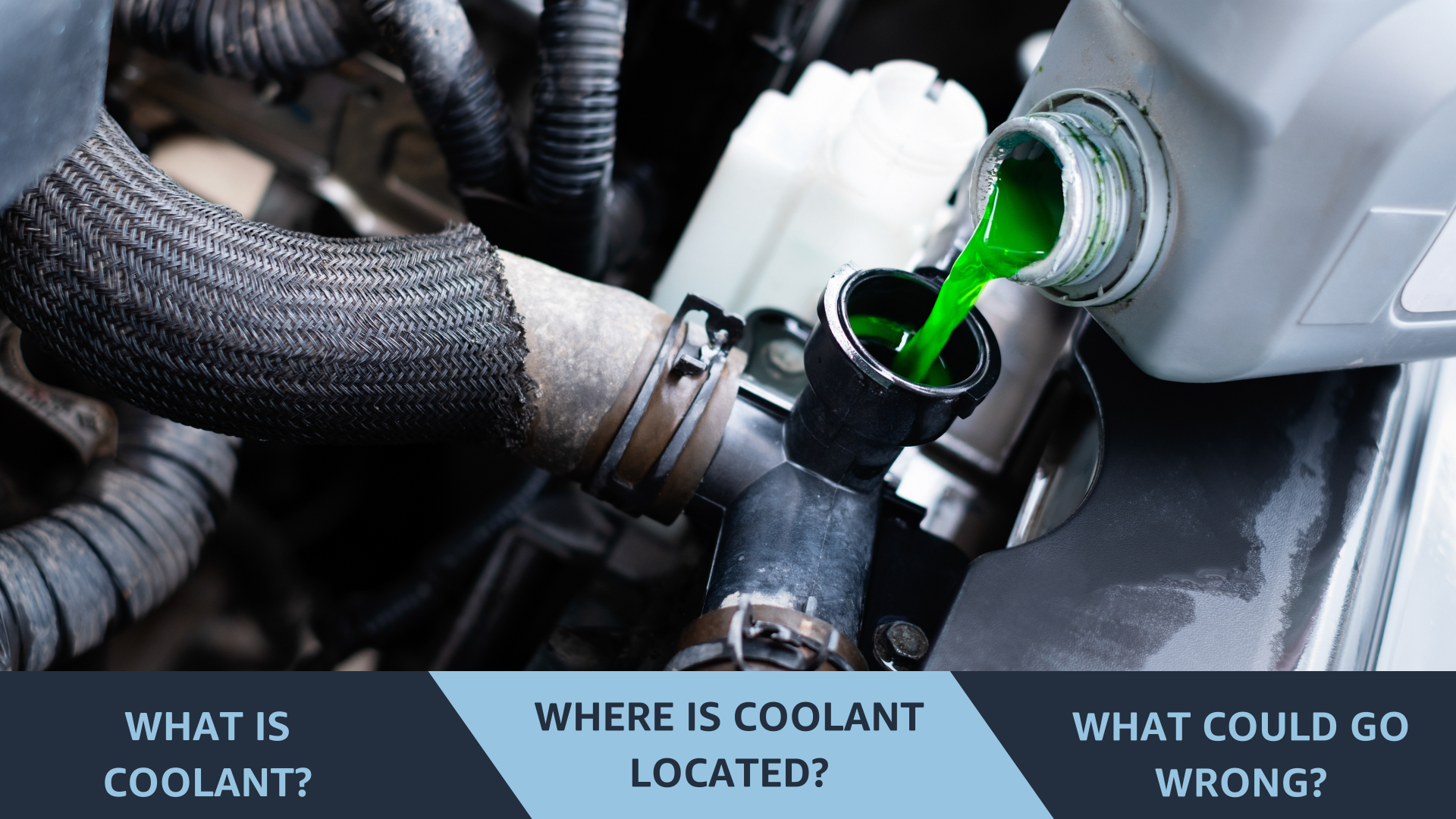
Coolant is a critical fluid within your vehicle that helps your engine to maintain the proper operating temperature.
Press each (+) marker to learn about your vehicle’s coolant.
Maintenance
There are several considerations to account for when it comes to maintaining the oil filters on your vehicle.
Press the (+) icon to view the best practices for maintaining your oil filters.
It is important to follow the manufacturer’s recommendations regarding coolant change intervals, the type of coolant to use, and any specific procedures for your vehicle. If you’re unsure or uncomfortable performing coolant service yourself, it’s best to consult a qualified automotive technician or take your vehicle to a trusted service center for professional assistance.
Inspect the coolant reservoir to ensure the coolant level is within the recommended range. If the level is below the minimum or “low” mark, you will need to add coolant or have a professional add coolant.
There are many different types of coolants, from conventional coolant to OAT coolants. Different types of coolants should never be mixed. If your vehicle is using a certain type of coolant, it is advisable to continue using that type. Additionally, a majority of engines use a 50/50 mix of coolant and water. Adding water or concentrated coolant can reduce the effectiveness of the cooling system and damage your vehicle.
Inspect the cooling system, including hoses, connections, and the radiator, for any signs of leaks. If you notice coolant leaks or any abnormalities, it’s advisable to have the cooling system checked by a professional technician.
Various tools, such as coolant refractometers and coolant test strips can be used to conduct a spot check on the condition of your coolant. When using these tools, always make sure you follow the included instructions and safety tips. When handling any fluid, including coolant, always wear proper PPE including gloves and safety glasses.
Transmission Fluid
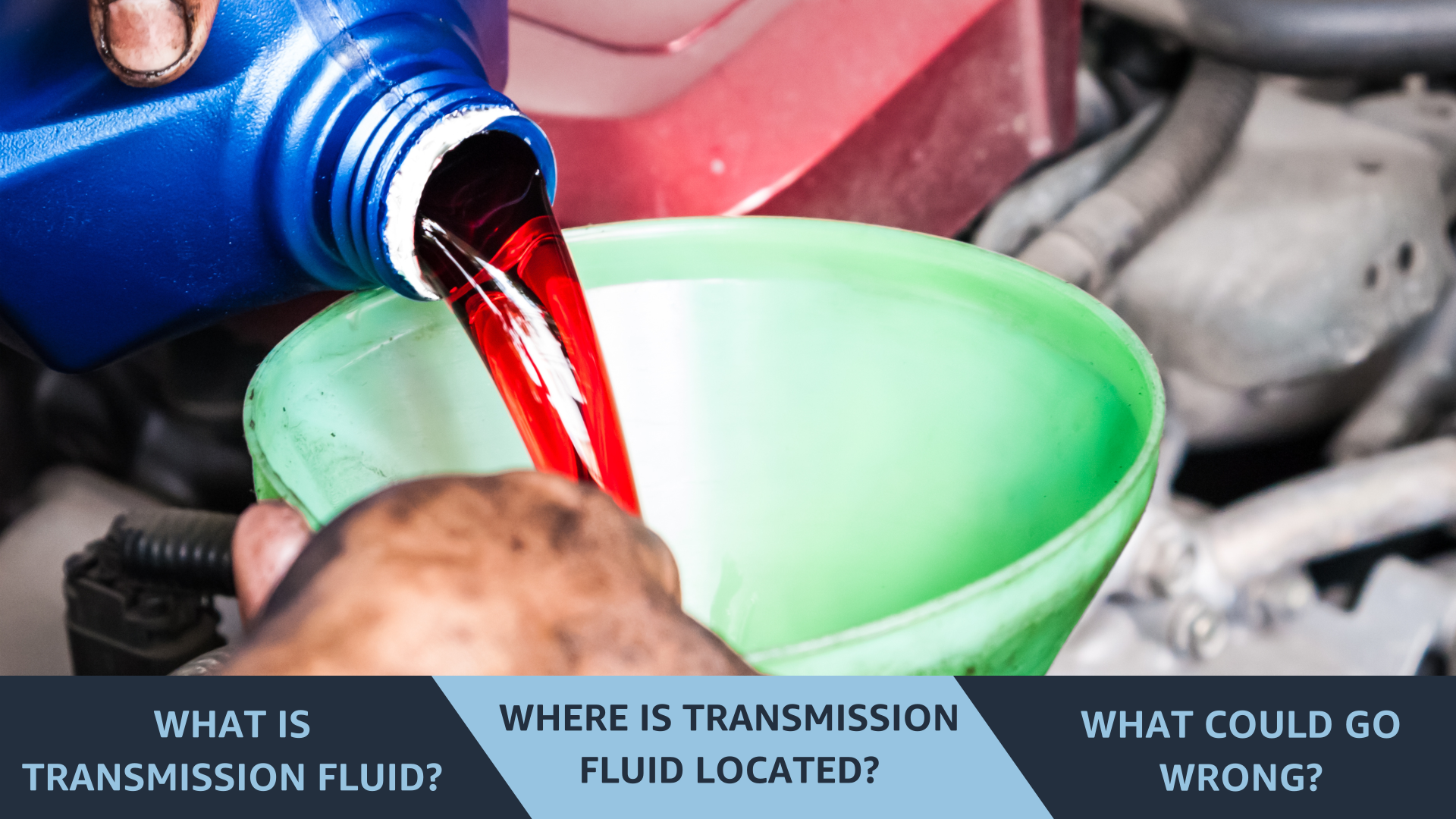
Transmission Fluid is a fluid designed to wear on the engine during operation.
Press each (+) marker to learn about transmission fluid.
Maintenance
There are several considerations to account for when it comes to maintaining the oil filters on your vehicle.
Press the (+) icon to view the best practices for maintaining your oil filters.
Check the level and condition of your vehicle’s transmission fluid. If the fluid level is low, you may have a leak. The fluid itself should be a bright red/pink color, clear, and it should smell sweet. If it’s murky, dark colored, or smells odd take it to a repair specialist to look things over.
Check under your vehicle for any signs of leaking fluid. Periodically check fluid lines to and from the transmission to the radiator for leaks. A small leak over time leads to a transmission that is low on fluid. Eventually, there will not be enough fluid to manage the heat generated from the transmission and the unit will overheat.
Follow your vehicle manufacturer’s specified mileage interval to change the transmission fluid. Additionally, use the manufacturer’s recommended transmission fluid. There are various types of fluid for different types of transmissions. Using the incorrect type of fluid for the transmission can cause significant damage.
Bring your vehicle to a complete stop before changing gears from “drive” to “reverse” or “park”, and vice-versa. Failing to do so puts strain on your transmission and after a can damage your transmission.
Having a certified transmission repair specialist conduct a diagnostic check of your transmission for leaks and other abnormalities at least once a year.
The vehicle’s cooling system also cools the transmission fluid so that it’s at an ideal temperature when it is not moving or when it shifts through the gears. In order to ensure that your engine and transmission fluid don’t overheat, make proper cooling system inspection and maintenance a part of your standard car care strategy.
Diesel Exhaust Fluid
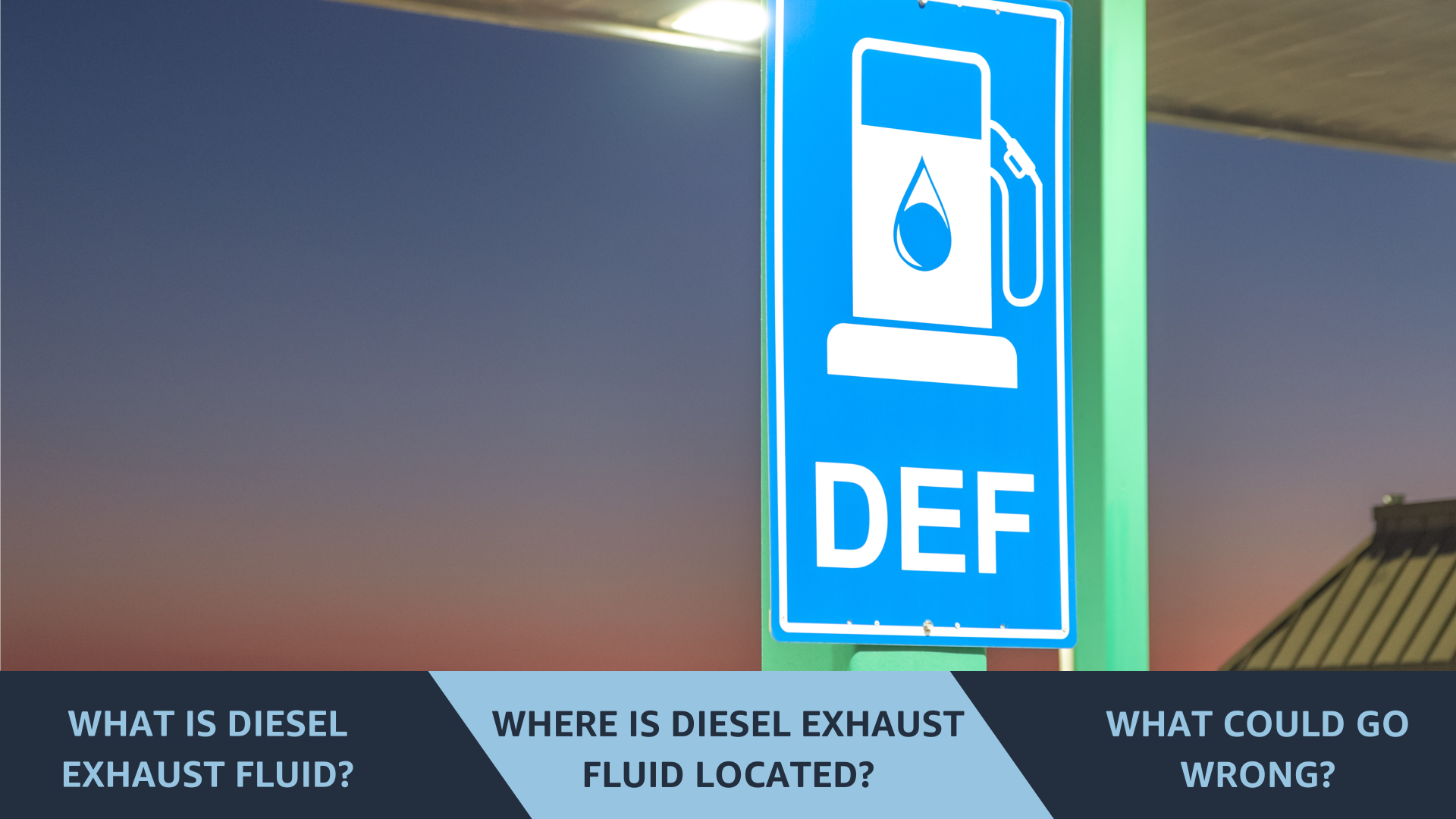
Diesel Exhaust Fluid (DEF) is a fluid designed to help reduce harmful emissions.
Press each (+) marker to learn about diesel exhaust fluid.
Maintenance
There are several considerations to account for when it comes to maintaining the oil filters on your vehicle.
Press the (+) icon to view the best practices for maintaining your oil filters.
DEF tanks are usually the same size to the vehicle’s diesel tank. Additionally, vehicles consume DEF proportionally to diesel fuel. Since you can fill them simultaneously, it’s much easier to keep track of when you need new DEF. However, remember that DEF is not a fuel additive and should never be mixed with diesel fuel.
The quality and formulation of DEF is specifically defined by ISO standards. All DEF should meet ISO standard 22241-1. Only buy and use DEF that has been certified as meeting ISO standards.
A contaminated DEF tank can lead to various issues, like using more DEF than necessary or corroding the tank. Tank replacements can cost thousands of dollars. Try to prevent them by cleaning the tank opening every time you fill it and using the proper ISO DEF.
When storing DEF, ensure you keep it in a place that does not get direct sunlight. This area should also maintain a moderate temperature to avoid freezing or overheating. Additionally, make sure DEF containers are tightly closed.
The storage life of DEF is about 12 months in optimal conditions. If DEF has been stored in the vehicle over the past 12 months, it is recommended that it be drained and replaced. If you purchase DEF in containers, be sure to use it before the expiration date on the bottle.
DEF freezes at 11° F (-11.7°C) and needs to be properly maintained and dispensed to preserve its quality. Like water, DEF will expand up to 7% when frozen and can damage the storage tank if it is full or nearly full when it freezes. Keeping a tank that you think may freeze if less than full is a good idea.
If DEF freezes in the vehicle, do not put any additives in the tank to help it melt. DEF needs to remain pure for it to work correctly. The vehicle will start without a problem and the DEF tank has a heating element that can quickly thaw the DEF.