
This course explains how to take care of a vehicle’s cooling system. It describes simple ways to keep vehicles running smoothly, helping avoid breakdowns and delays on the road. The course covers basic steps for checking and maintaining vehicles to ensure safe driving and on-time deliveries.
This course will take approximately 10 minutes to complete.
This course is mobile friendly. You can take it on your phone or on a computer. Select the cards below for tips on taking this course on your phone.
The overall cooling system keeps a standard operating temperature for the engine by circulating coolant and antifreeze, through the engine to the radiator. This pulls heat away from the engine.
Press the tabs below to learn more about antifreeze and coolant:
Antifreeze is a concentrated liquid typically made of ethylene glycol that lowers the freezing point of water when mixed with it. Antifreeze is used to prevent your vehicle’s coolant from freezing and coolant is used to regulate your engines temperature.
Coolant is a mixture of water and antifreeze (usually a 50/50 ratio) used in the cooling system to regulate the temperature by absorbing heat and preventing freezing in cold weather.
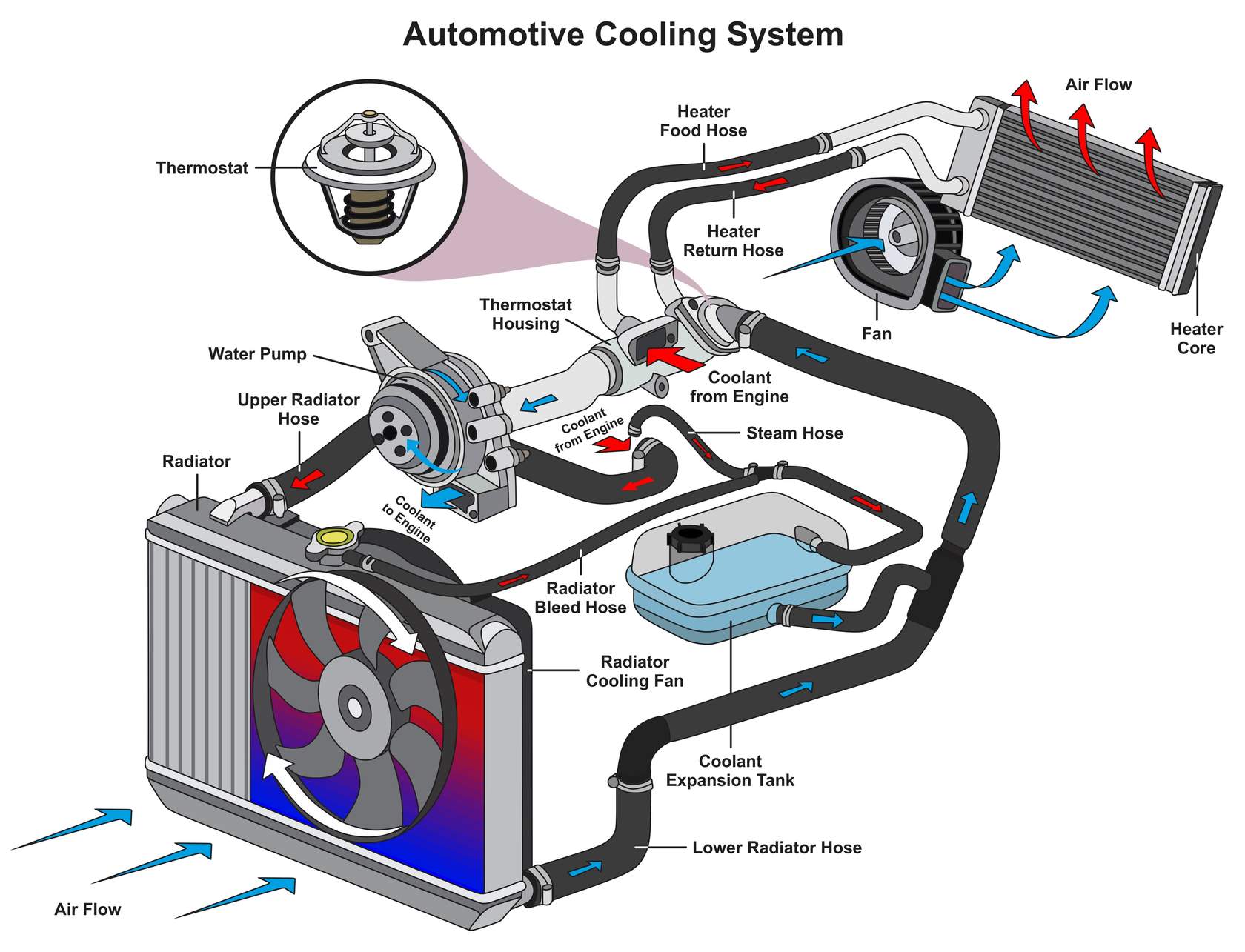
The cooling system is primarily located at the front of the engine compartment and consists of the radiator, water pump, thermostat, and the cooling reservoir. If you are unsure where the cooling system is located for your vehicle, please reference your vehicle’s owner manual.
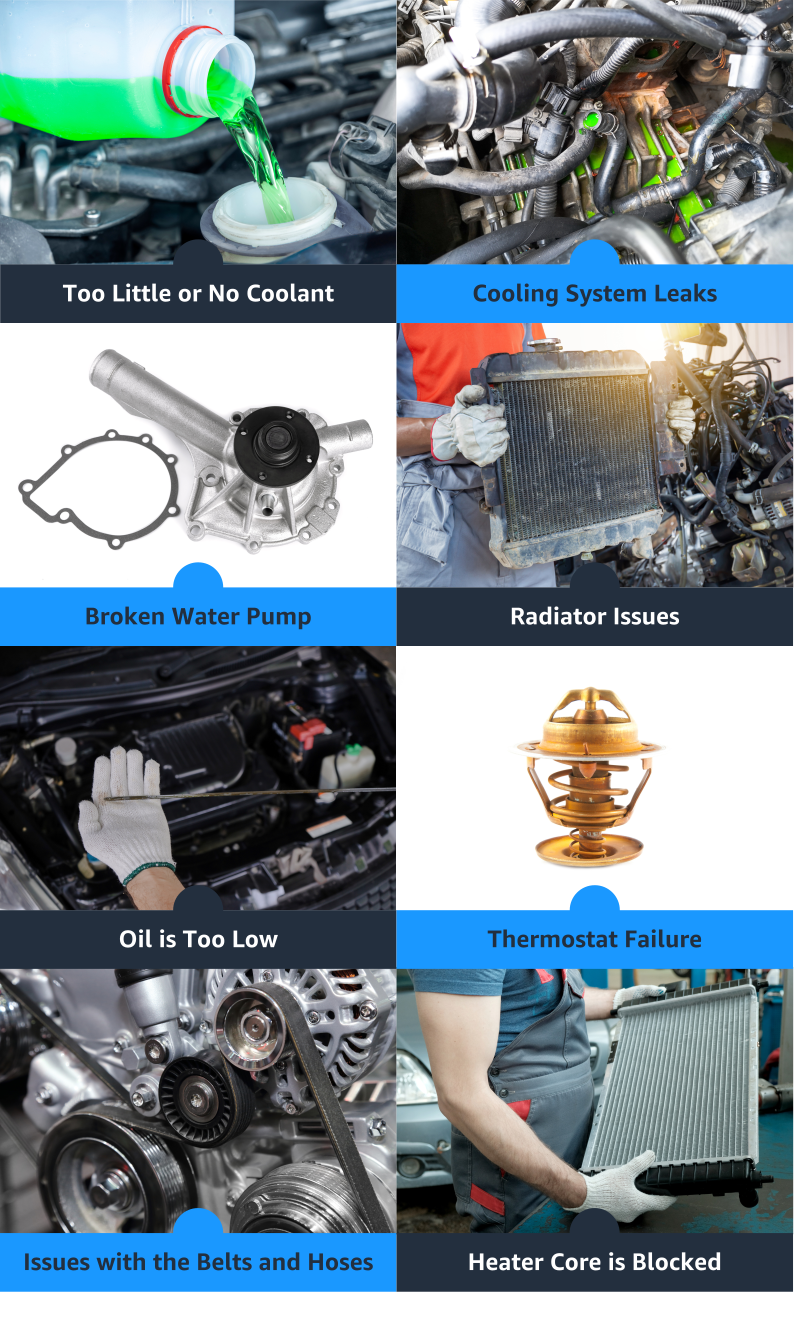
Overheating of an engine is when heat generated by a vehicle’s motor is well above the normal operating temperature. When this occurs, the devices made to cool this heat distribution may begin to fail, potentially causing permanent damage to not only the engine, but also the gaskets, hoses, and seals that are designed to keep the engine running.
Press the (+) icons below to learn about some of the possible causes of overheating (allow time for the image to load):
There are several considerations to account for when it comes to maintaining the cooling system on your vehicle.
Press the arrow below to learn more about the best practices for maintaining you cooling system.
There are also a few things you can do if you suspect your truck is overheating.
Press the arrow below to learn more about the best practices for when you suspect your truck is overheating.