Mccoy

Overview

Inspections before and after your trip are important steps for ensuring the vehicle is road-ready to safely haul loads. This course will provide best practices for pre-trip and post-trip inspections and explain why they are important

Time

This course will take approximately 10 minutes to complete. 

Navigating This Course

This course is mobile friendly. You can take it on your phone or on a computer. Select the cards below for tips on taking this course on your phone.

Click the magnifying glass icon (+) to zoom in and click again to return to normal size.
When you see a "CONTINUE" button, select it to unlock the next section of the course.
Rotate your phone for better access to course content.
Pre-/Post-Trip Inspection Overview

Knowing What to Look For

The Department of Transportation’s (DOT) Federal Motor Carrier Safety Administration (FMCSA) requires all commercial driver’s license (CDL) drivers to certify the health of their vehicle before and after every trip. This process is known as the pre-trip inspection or “pre-trip”. The inspection that is completed after a trip, is called the post-trip inspection, or “post-trip”. A Driver Vehicle Inspection Report (DVIR) is recommended to conduct these evaluations.

The DVIR is certification that a vehicle is safe to be operated. Federal authorities can also perform an audit. You should take every DVIR seriously.

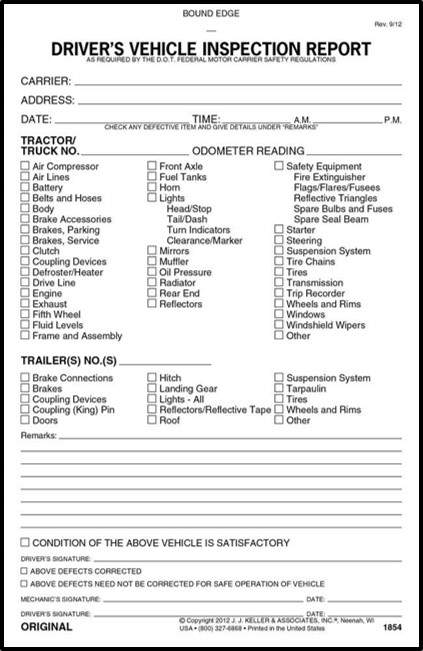
Here is a blank DVIR sample below:

Blank DVIR

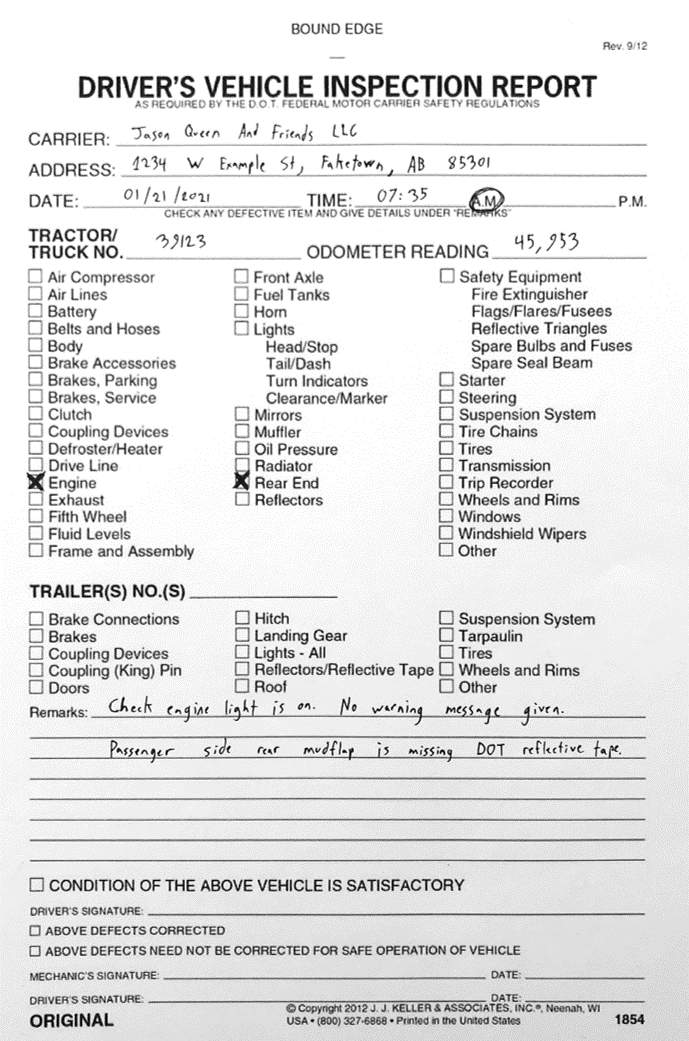
Here is an example of a completed DVIR with 2 defects to report:

Completed DVIR with 2 defects to report

Remember this:

  1. Pre- / Post-trip inspections should be performed according to Department of Transportation (DOT) and the Federal Motor Carrier Safety Administration (FMCSA). 
  2. When completing a Driver Vehicle Inspection Report (DVIR), your company is certifying that this vehicle is safe to be operated on the road. 
Diesel Tractors

Evaluating the Front

When evaluating the front of a vehicle, it is recommended to check for the following:

  • Bent, broken, or cracked parts.
  • Leaks on the ground.
  • That the grill/bumper is properly mounted and in good condition.
  • Mirrors are clean and mounted properly.
  • Lights are the proper color and not cracked.

Press each hotspot in the images below to review the components of the front of the truck.
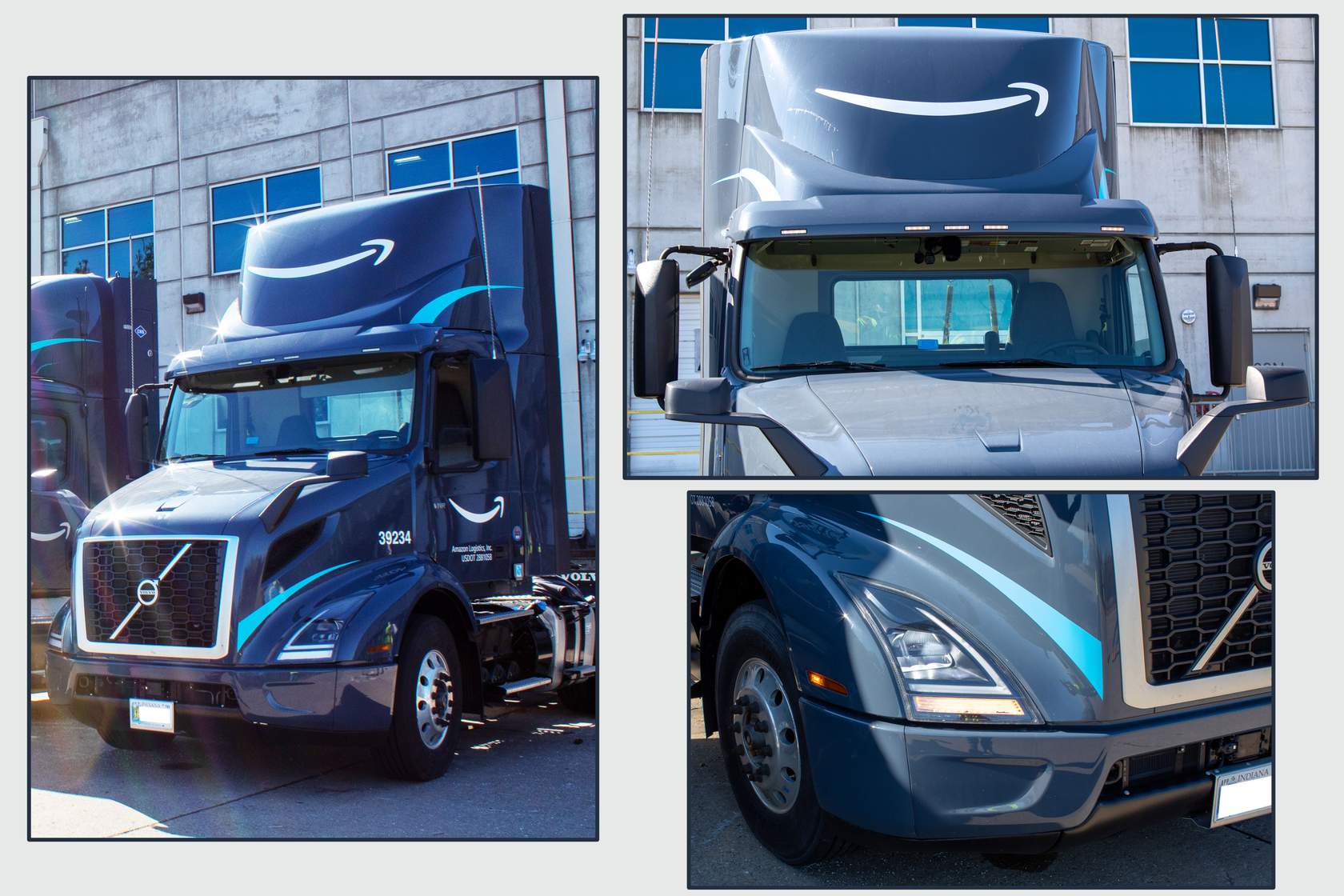
front of a tractor

Under the hood

When inspecting under the hood, it is recommended to lookout for bent, broken, cracked, frayed, leaking or missing parts. 

If any of these defects are found, it is likely not safe to drive the truck. Notate the defects in your DVIR, and report the defects immediately to your carrier and by using the “Request a callback” feature within the Relay Mobile app.  

Click-to-Call

Press the START button or (>) arrow to learn how to use the Click-to-Call (C2C) feature.

Pre-/Post- Trip Components

For the parts listed below, it is recommended your company check the following at every Pre-/Post- Trip inspection.

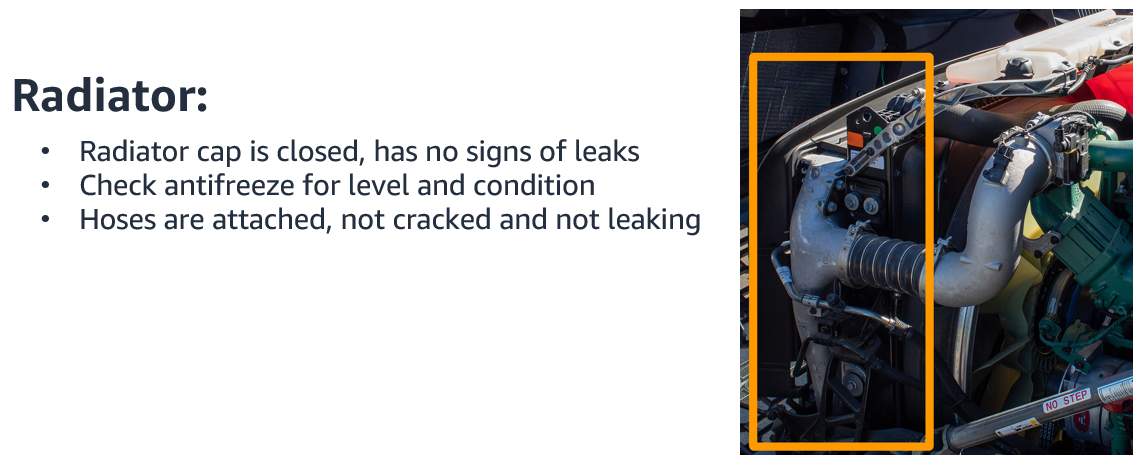
radiator


WARNING: Before opening the radiator cap, allow the vehicle time to cool off if it was previously in operation. Opening the cap while the radiator is hot may result in serious injury.


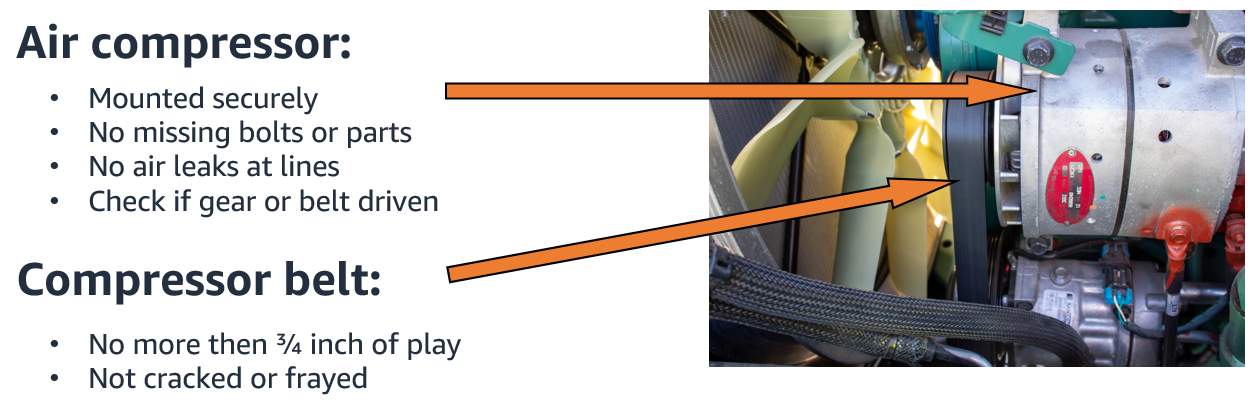
air compressor and compressor belt
 
 
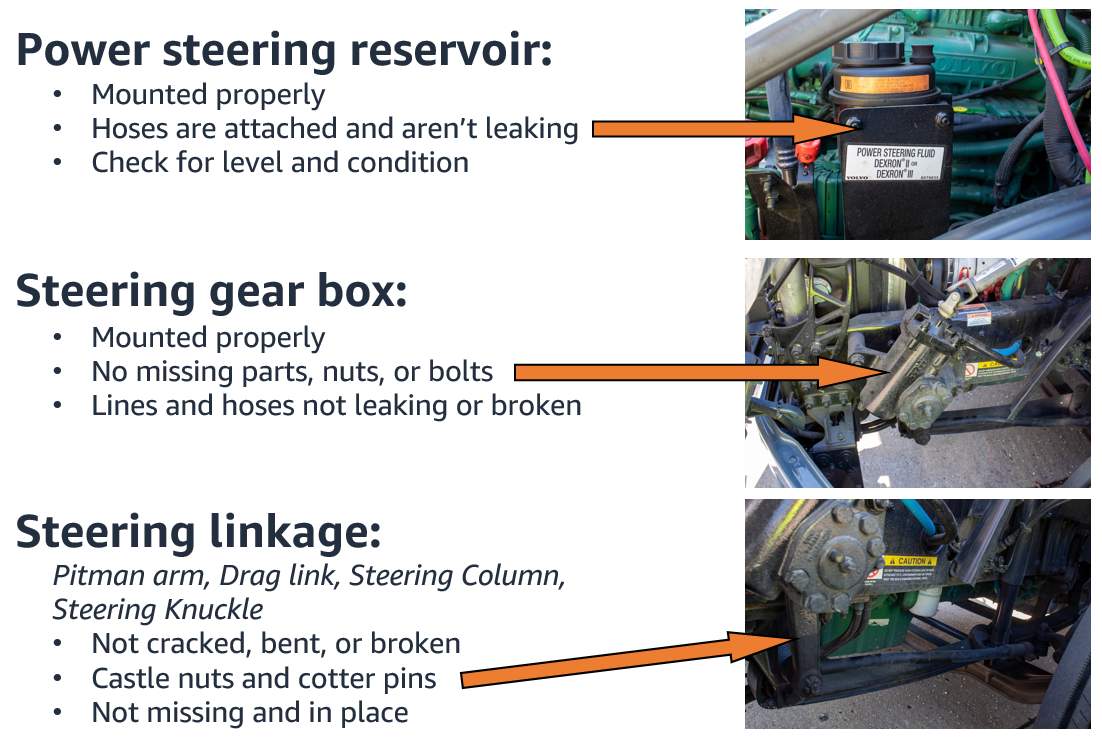
power steering reservoir, steering gear box, steering linkage
 
 
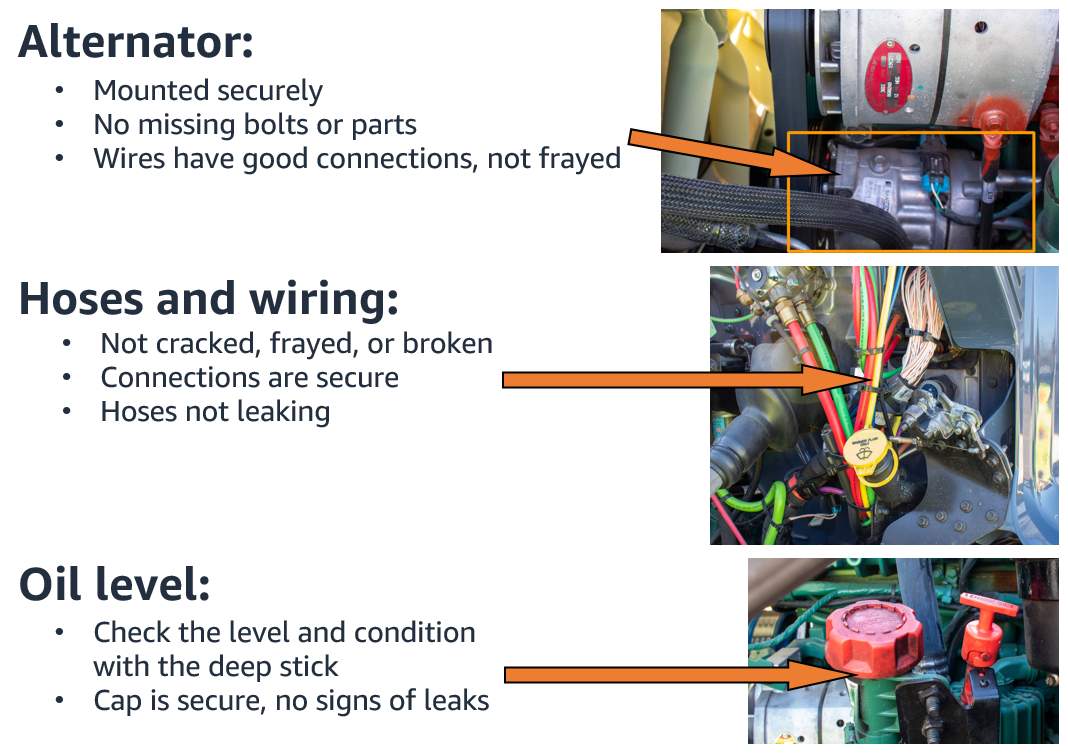
alternator and hoses and wiring and oil reservoir
 
 
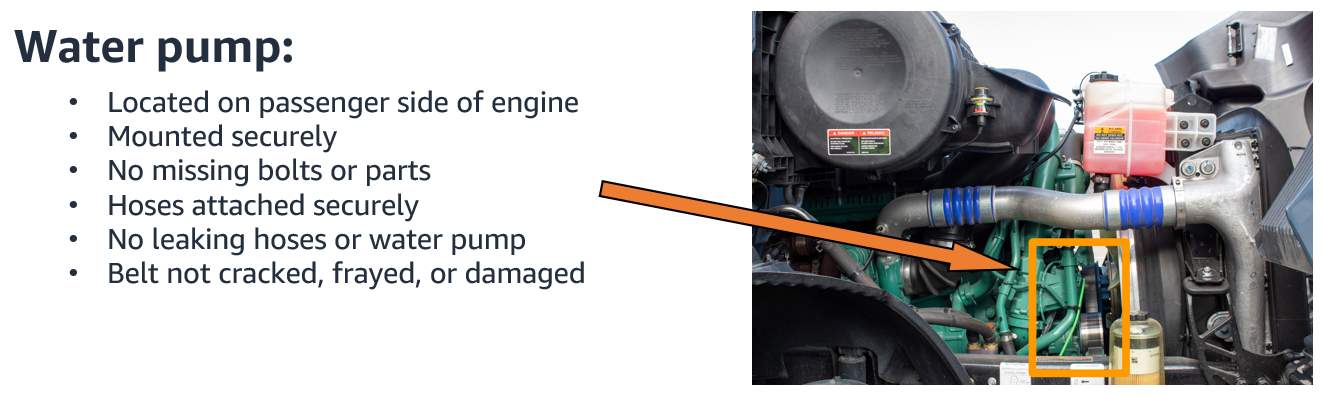
water pump

Check the sides

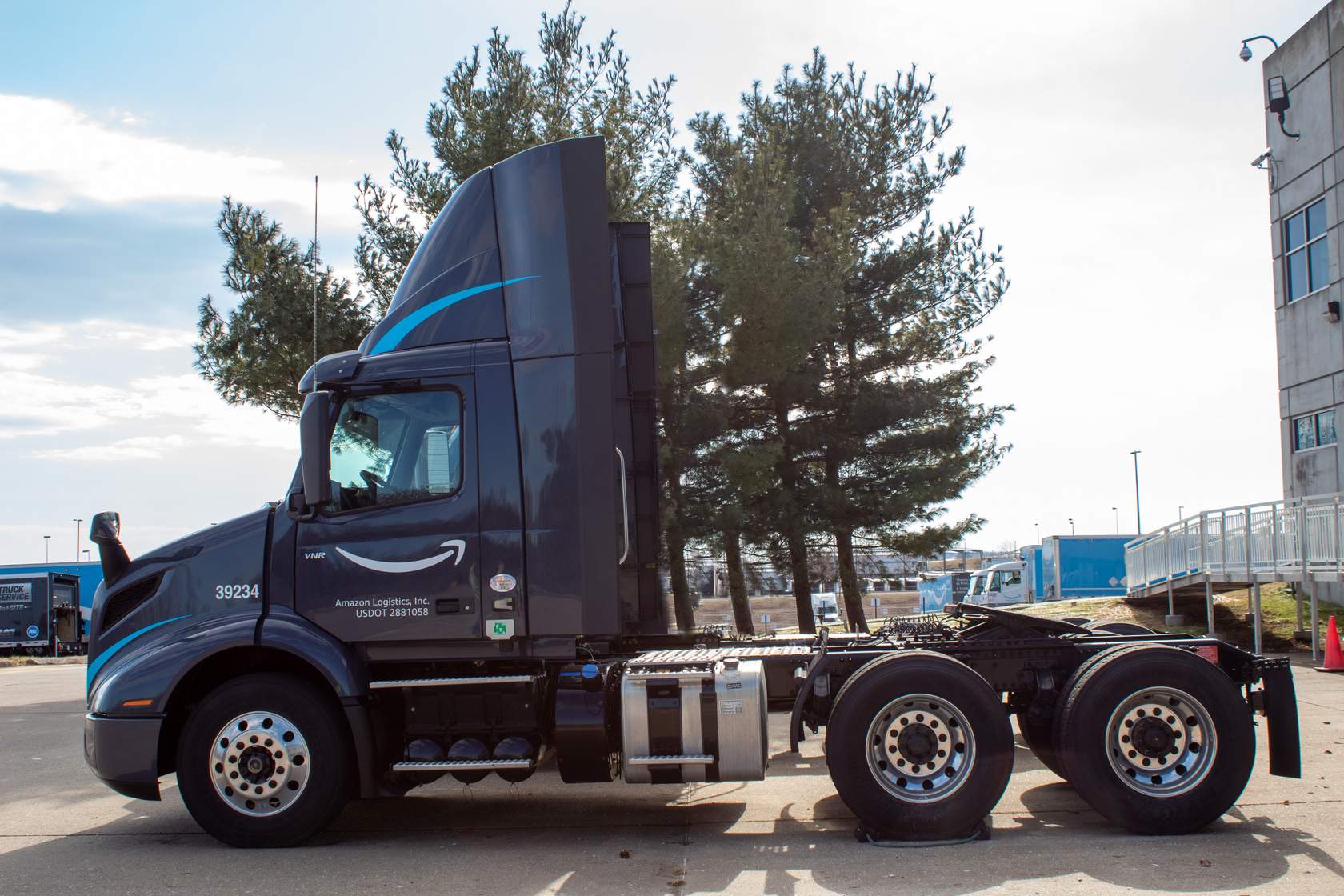
Press each hotspot in the image below to review the components of the side of the truck .

side of tractor
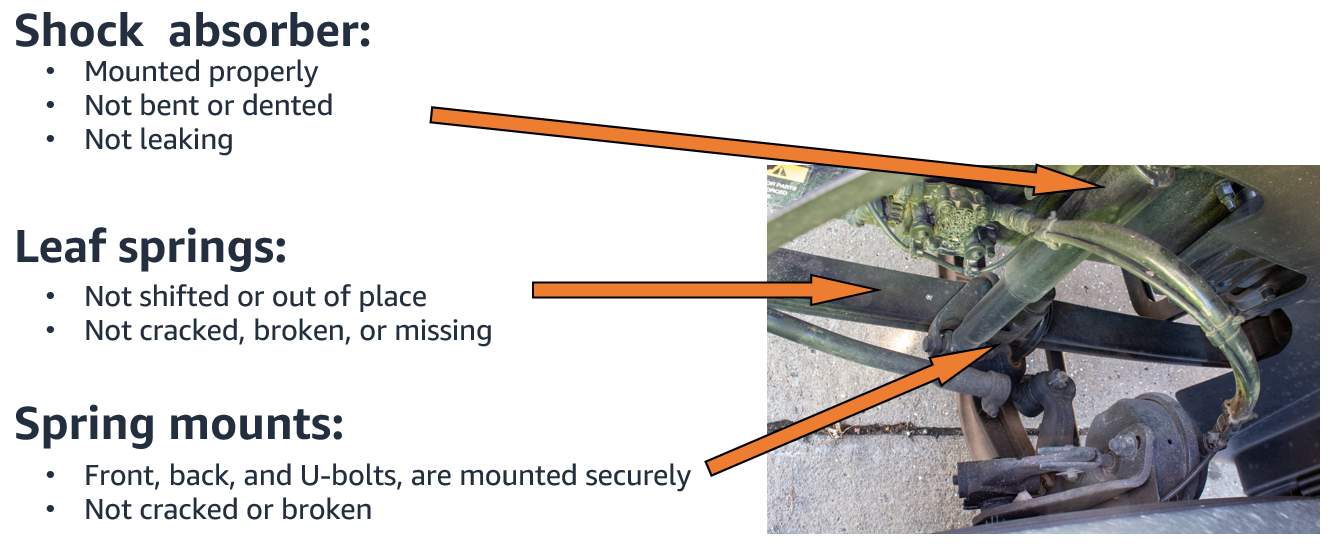
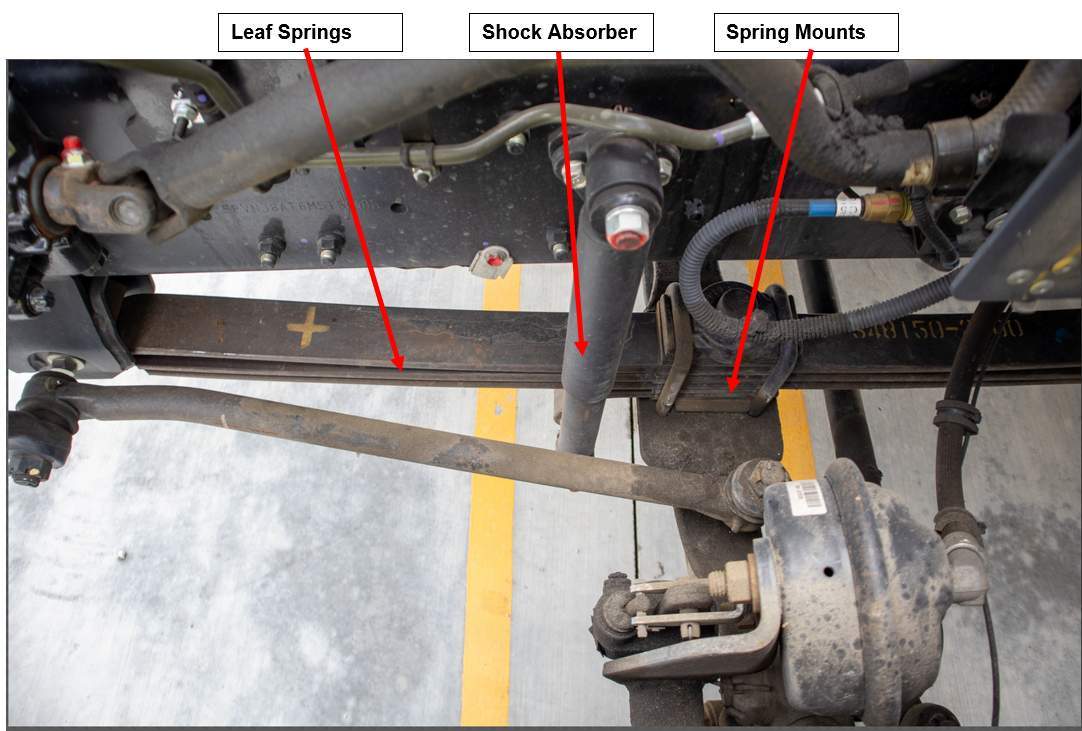
shock absorber, leaf springs and spring mounts


Check your back

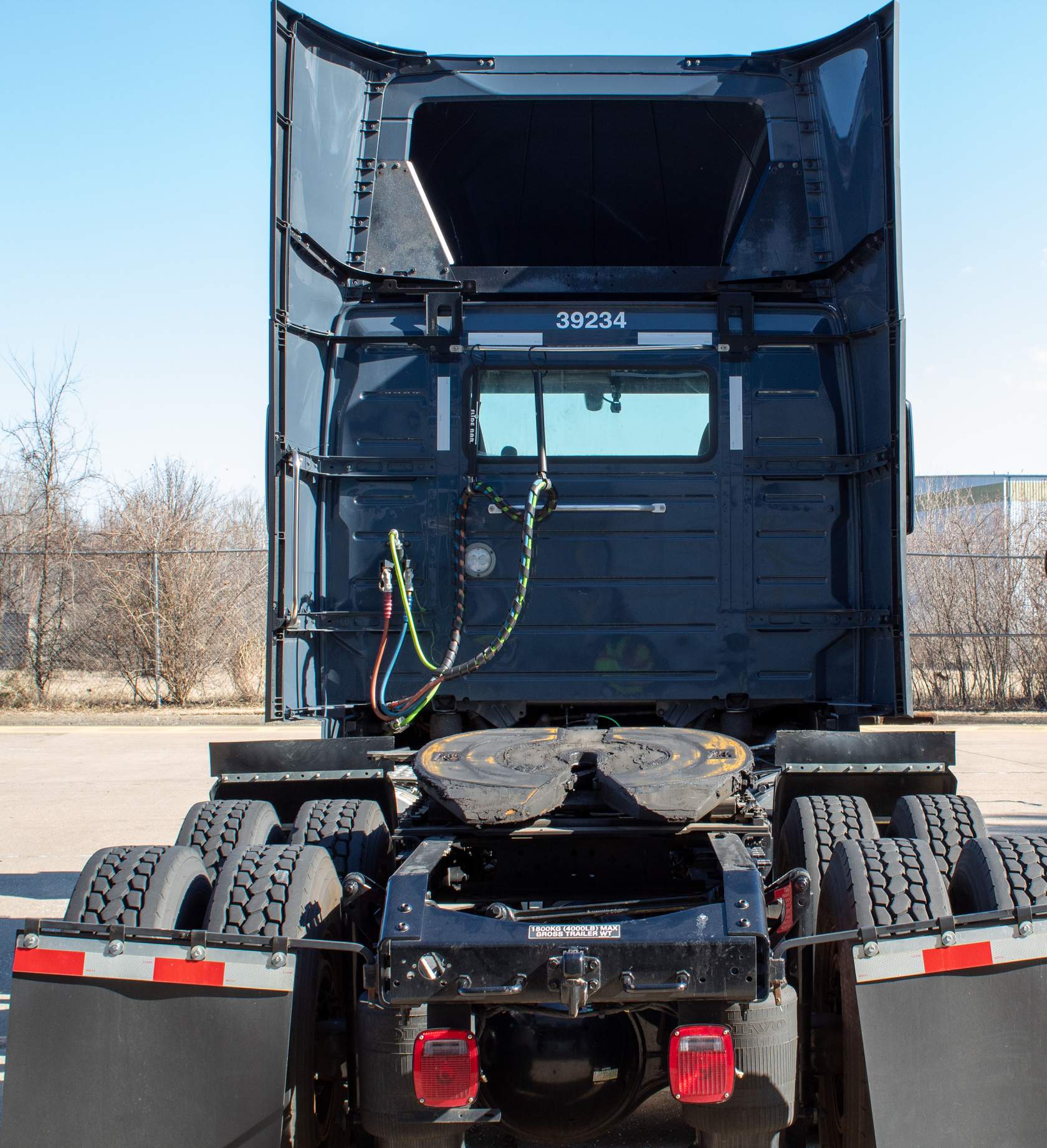
Press each hotspot in the image below to review the components of the back of the truck

rear of tractor

For the parts listed below, it is recommended your company check the following at every pre- and post-trip inspection.

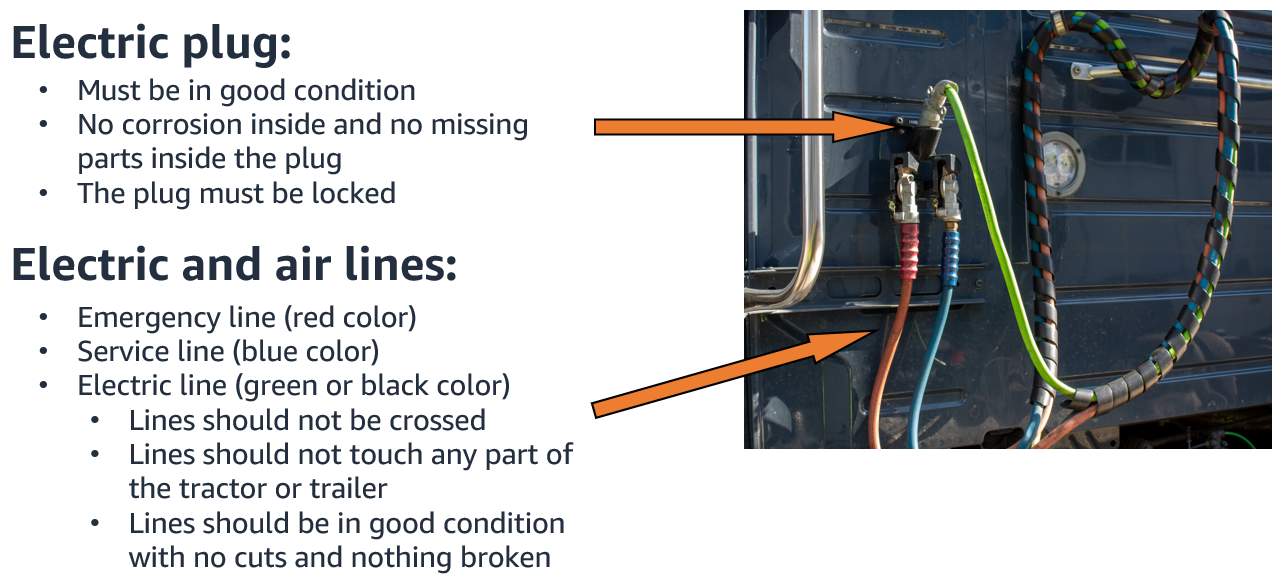
electric plug and electric and air lines
 
 
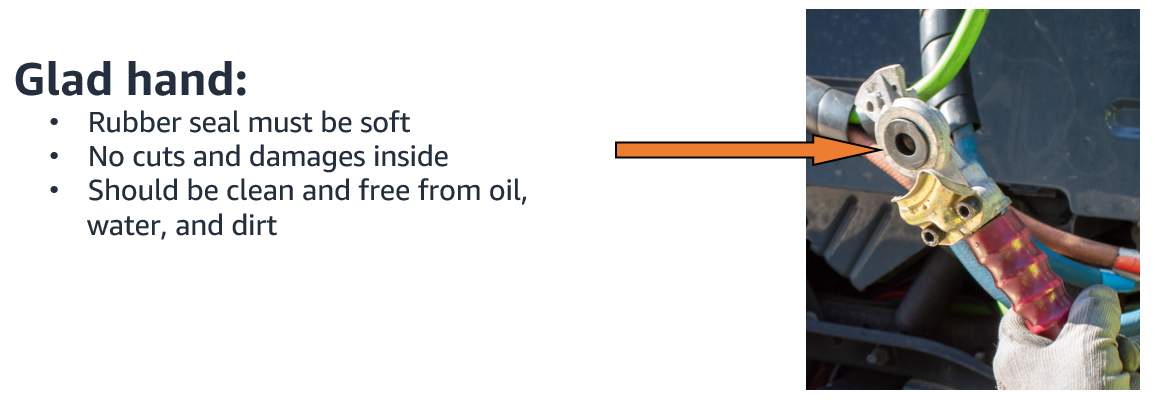
glad hand

Check the dash

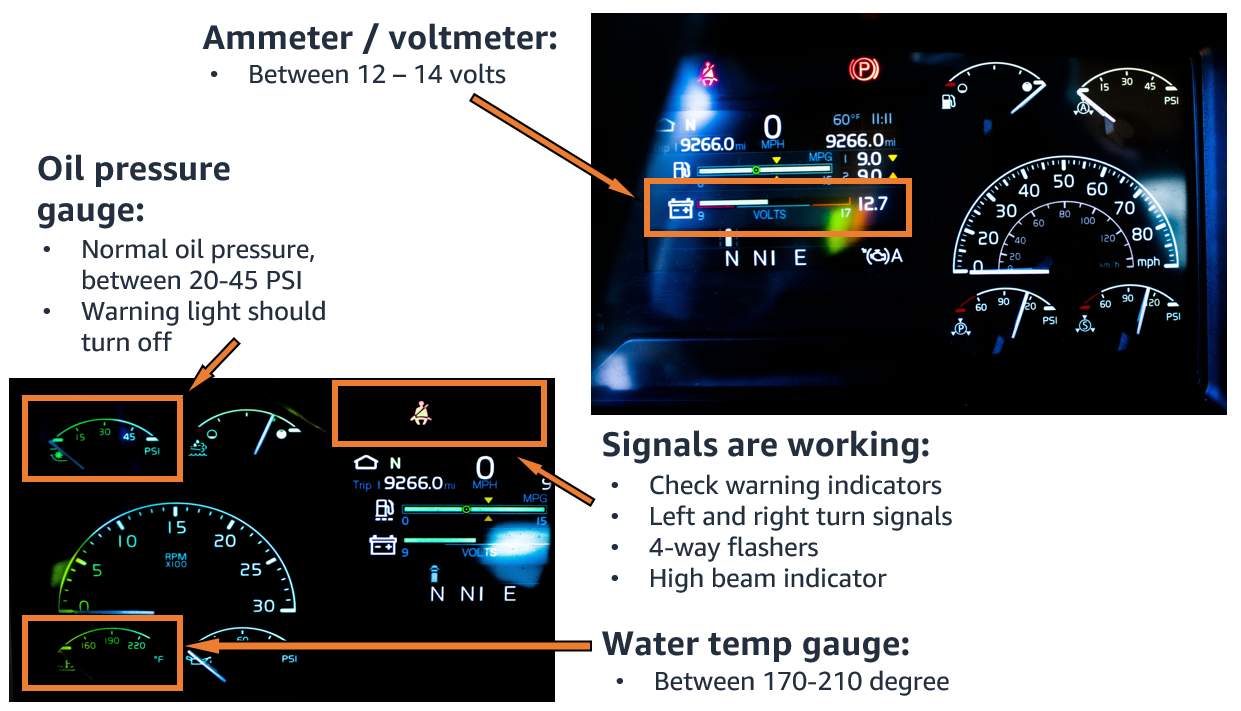
gauges on dash
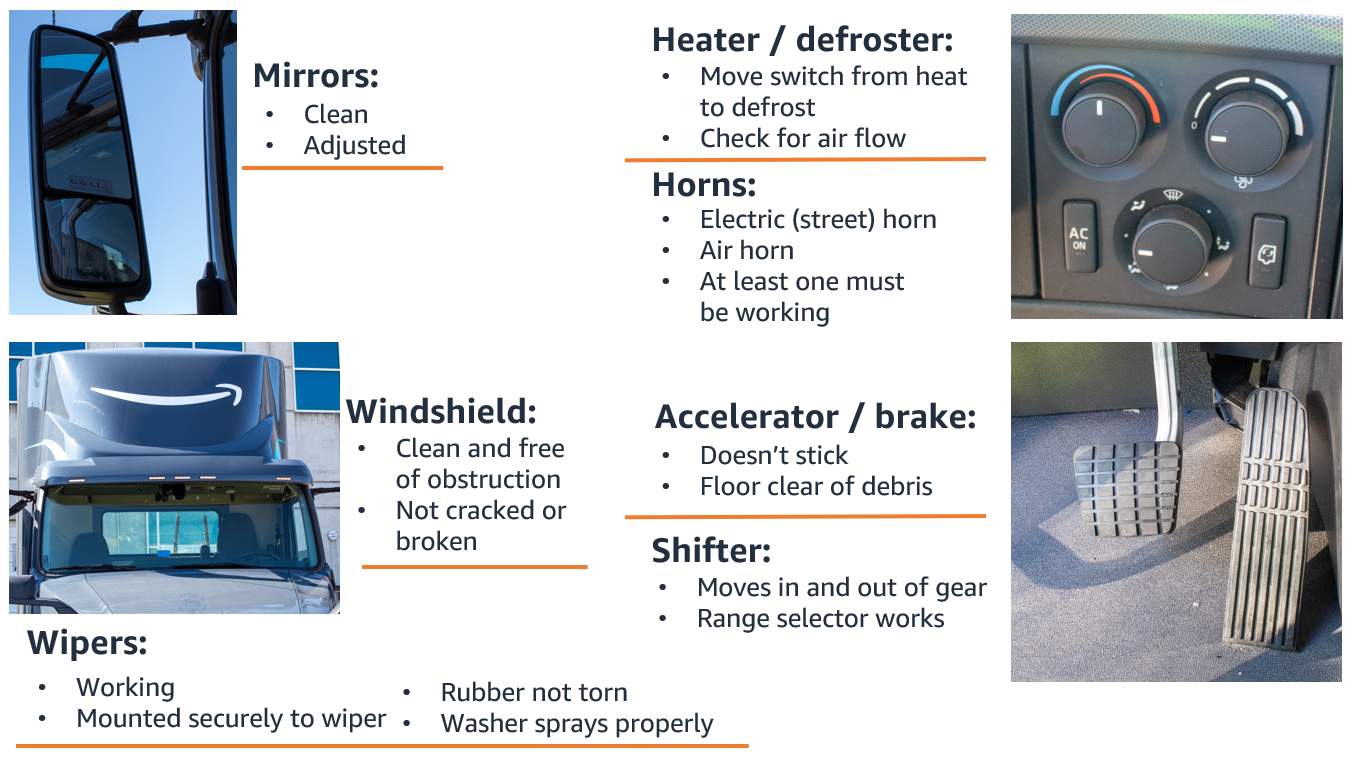
components of tractor

For the parts listed below, it is recommended your company check the following at every pre- and post-trip inspection.

electric plug and electric and air lines
 
 
glad hand

Test your brakes

It is recommended your company check service, emergency, and parking brakes at every pre- and post-trip inspection.

NOTE: The below are DOT regulation tests, and should be checked during pre- / post-Trip inspections. Additional resources can be found on the FMCSA government website, or the California Department of Motor Vehicle handbook for PSI requirements and inspecting air brake components.
Air Leak Test (Static)
  • Air pressure should be be maximum (120 -130 PSI).
  • Transmission: 1st gear.
  • Turn engine OFF
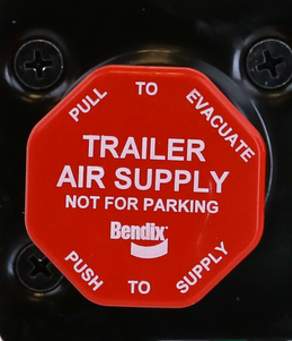
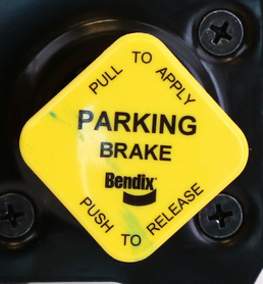
  • Release parking brakes (yellow, red knobs IN).
  • DO NOT TOUCH brake pedal, wait one minute, check to ensure air pressure loss is no more than 3 PSI.
Air Leak Test (Applied)
  • Air pressure should be minimum of 90 PSI.
  • Transmission: 1st gear
  • Engine is OFF
  • Parking brakes released (yellow, red knobs IN).
  • Depress and hold brake pedal for one minute.  Air Leakage should not be more than 4 PSI.
Low Pressure Warning Device Test
  • Air pressure should be maximum (120 -130 PSI).
  • Transmission: 1st gear
  • Engine is OFF, ignition is ON.
  • Release parking brakes (yellow, red knobs IN).
  • Pump brake pedal, release (fan down).
Buzzer + Red Light on by 60 PSI | Spring Brake Pop-Out Test
  • Air pressure should be maximum 60 PSI.
  • Transmission: 1st gear.
  • Engine is OFF.
  • Parking brakes released (yellow, red knobs IN).
  • Pump brake pedal, release (fan down).
  • Tractor (yellow) and trailer (red) should pop-out between 20 – 40 PSI.
  • Trailer (red) pop-out first to avoid jackknife of trailer.
Slack Adjuster Check
  • Park on level ground.
  • Apply parking brakes.
  • Put transmission on first gear.
  • Turn engine OFF and put key in the pocket.
  • Block the wheels (place chock).
  • Release parking brakes.
  • Trailer (red) pop-out first to avoid jackknife of trailer.

Remember this:

  1. Lookout for bent, broken, cracked, frayed, or missing parts. 
  2. It is recommended to check service, emergency, and parking brakes.
  3. Your company is responsible for DOT vehicle compliance.
  4. If compliance or safety errors, are found, it is likely not safe to drive the truck. Report defects when it is safe using the “Request a callback” feature within the Relay app, and notate the defects in the DVIR.
Compressed Natural Gas Tractors

How CNG Differs from Diesel

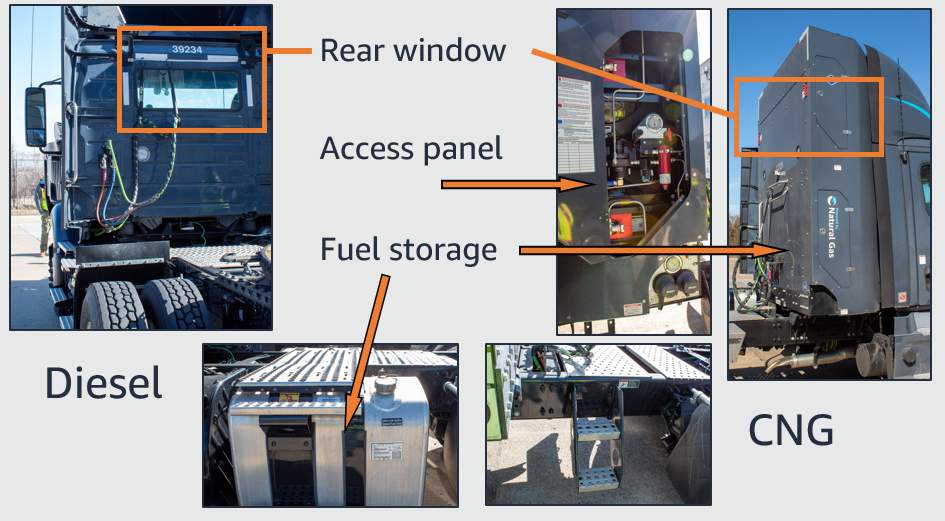
When evaluating these vehicles, your company may find differences between diesel and compressed natural gas (CNG) operated vehicles. Compared to diesel, CNG is an alternative fuel type used in commercial vehicles. You will learn more about the unique characteristics of CNG and Diesel vehicles later in this section.

To continue, check each box as you read the CNG Vehicle Characteristics:

NOTE: CNG vehicles lack a back window. The backup camera and the side, spot, and hood mirrors (if available) may be utilized.
components of CNG vehicle

Remember this:

  1. CNG vehicles are alternative fuel vehicles that are different from diesel operated vehicles. 
  2. It’s important to understand your company’s vehicle compliance requirements for Pre- and Post-trip inspections.
Box Trucks

Components of Box Trucks

The following section goes over in detail the various components of Box Trucks. It outlines the safe conditions that these components should be in.

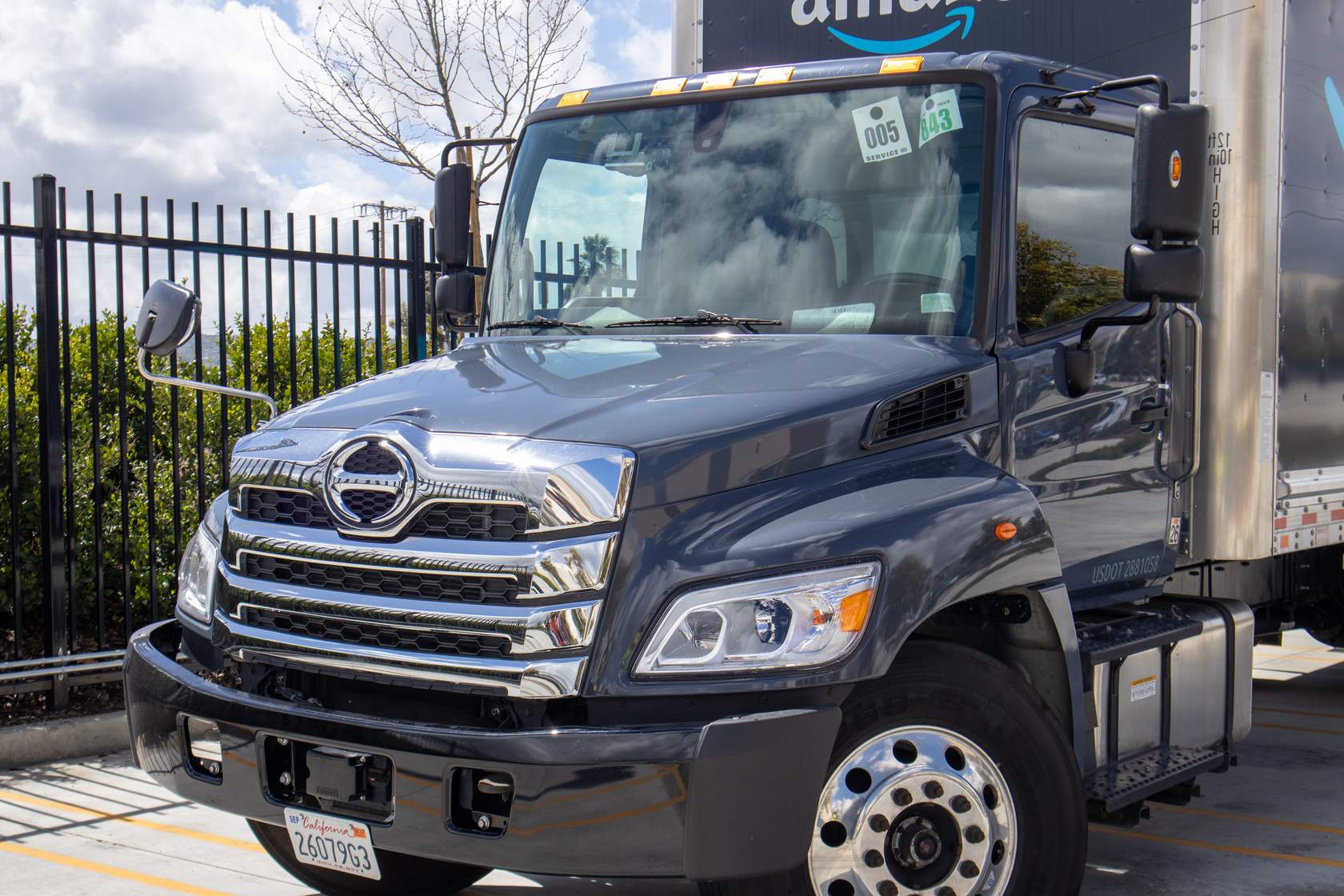
Front of the Truck

Press each hotspot in the images below to review the components of the front of the truck.

CNG box truck

Side of the Truck

Press each hotspot in the images below to review components of the side of the box truck.
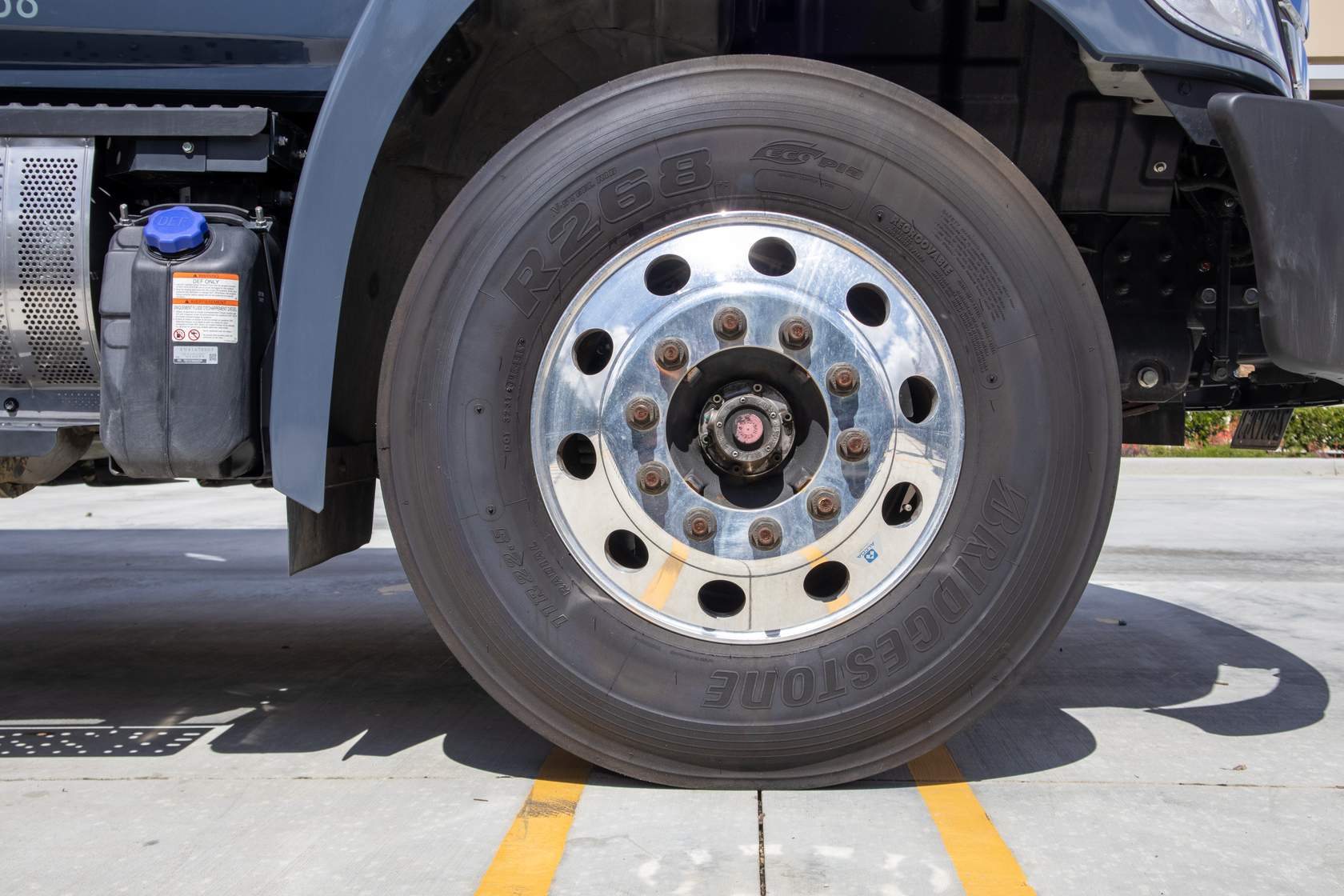
tire
cab of box truck
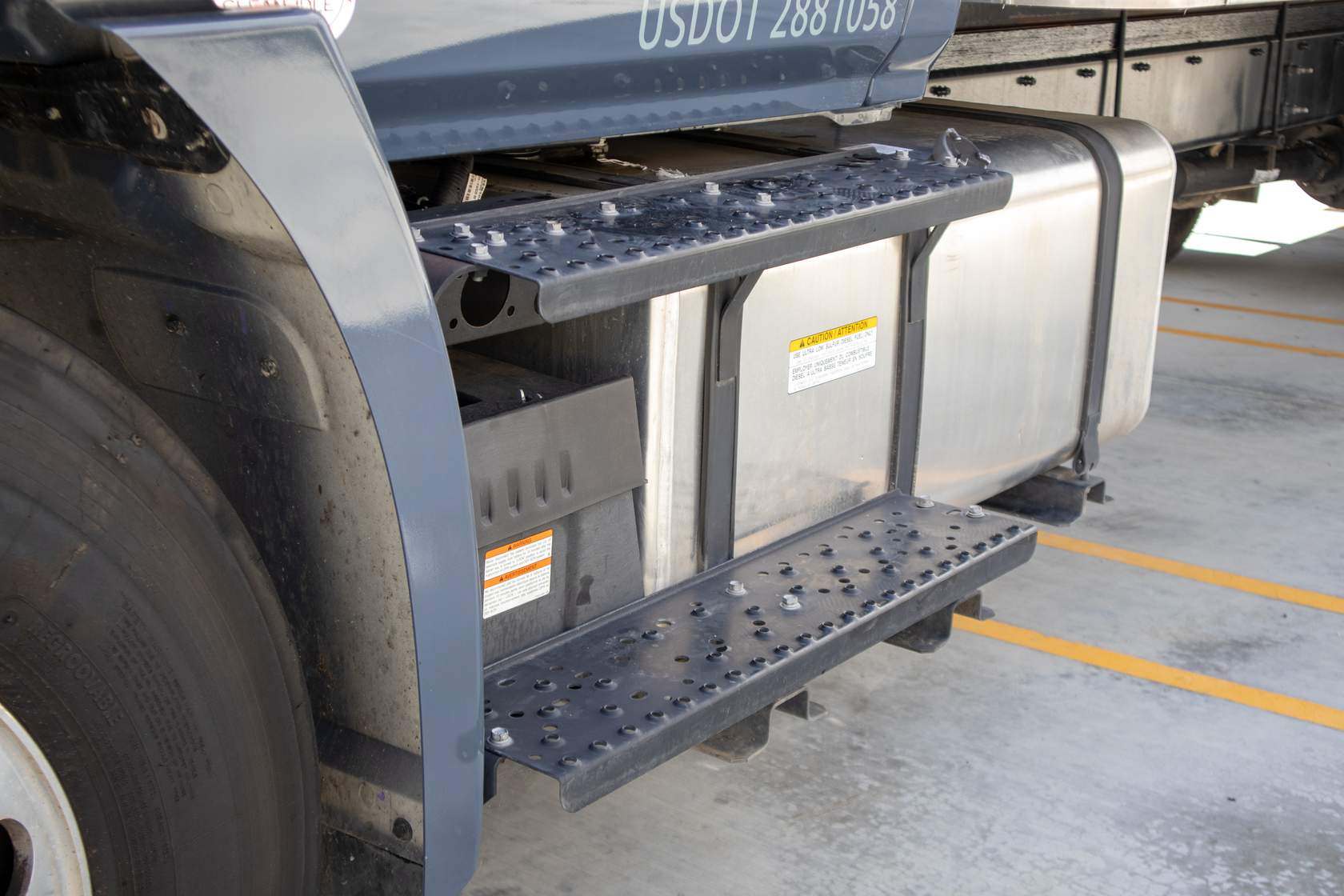
steps

Rear of the Truck

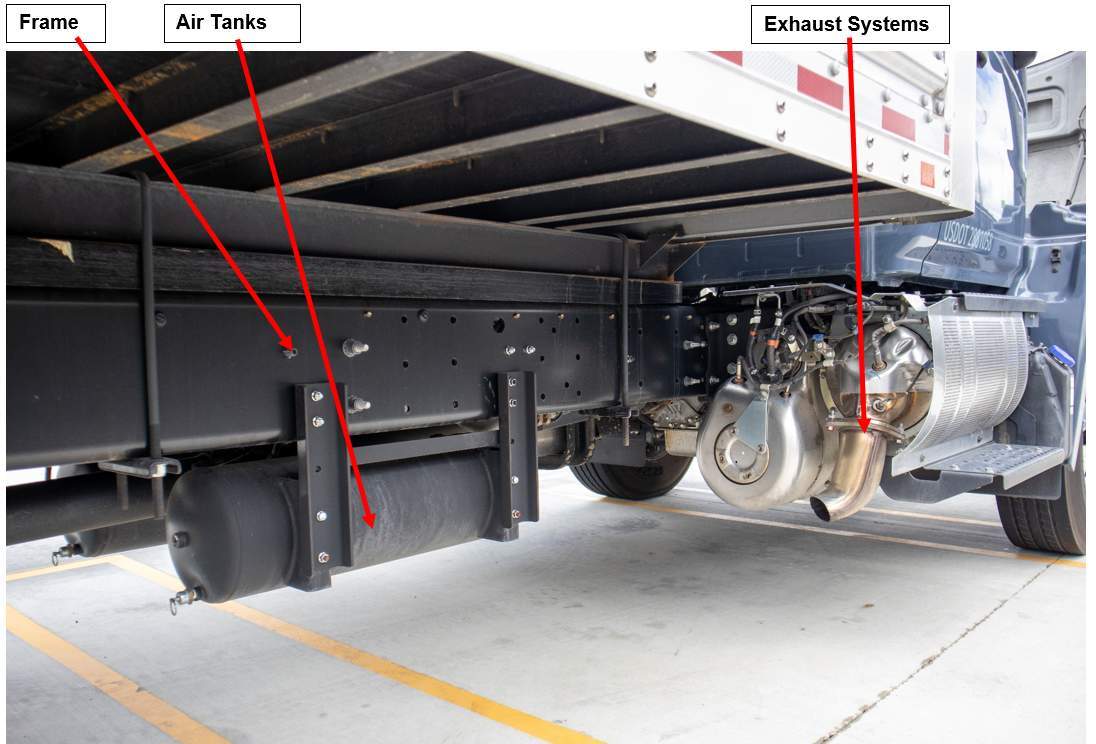
Press each hotspot in the images below to review components in the rear of the box truck.

rollup door

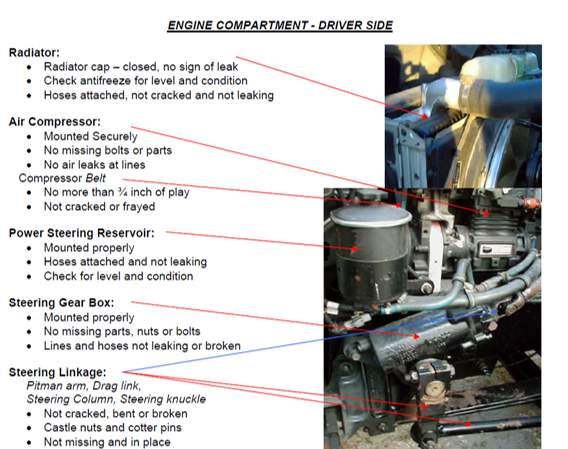
Engine Compartment Driver Side

passenger side engine
 

Press the (+) icon to learn more about what drivers must do when operating a vehicle in the yard.

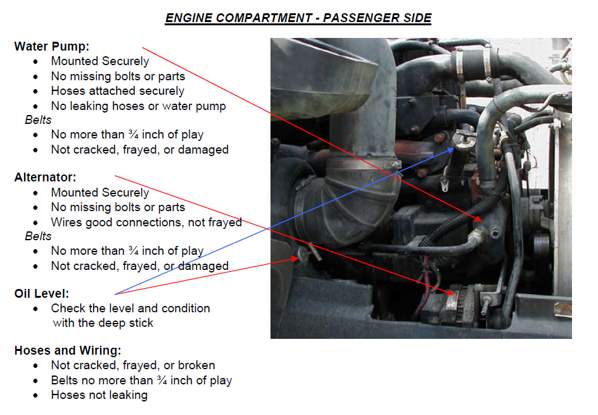
Passenger Side

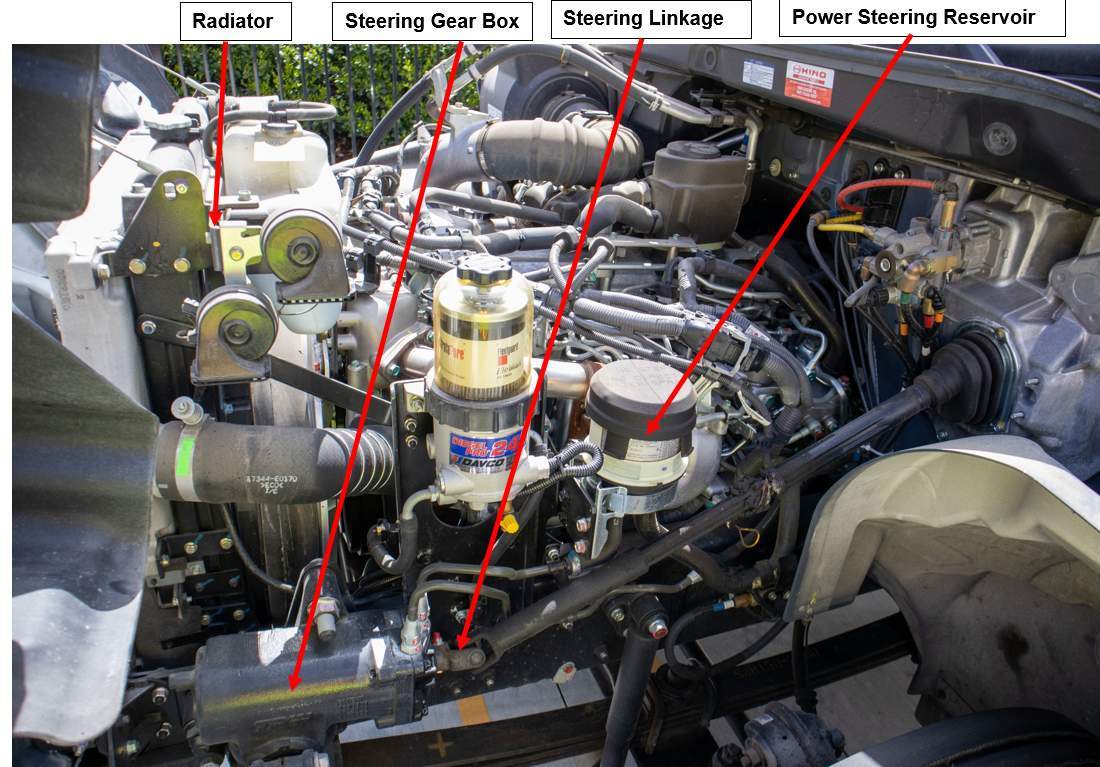
passenger side engine compartment


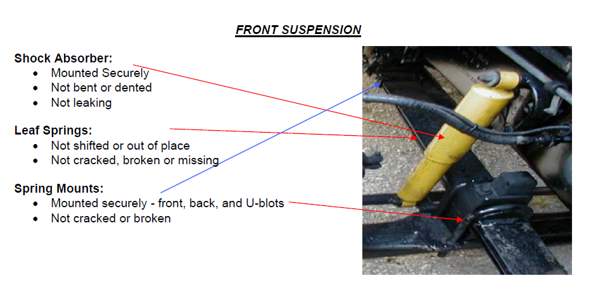
Front Suspension

front suspension

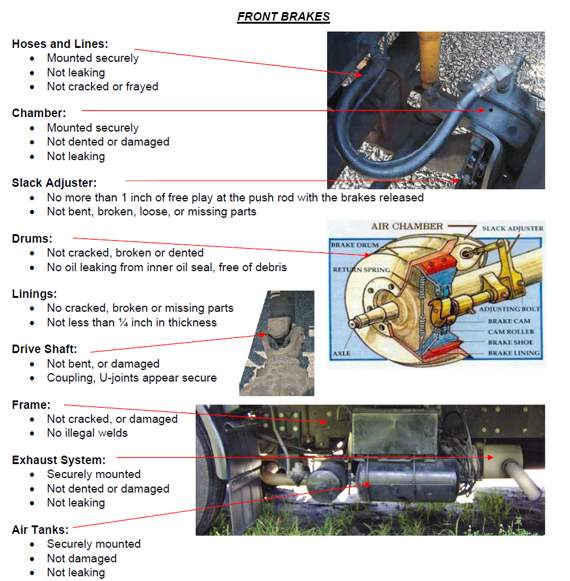
Front Brakes

components of front brakes

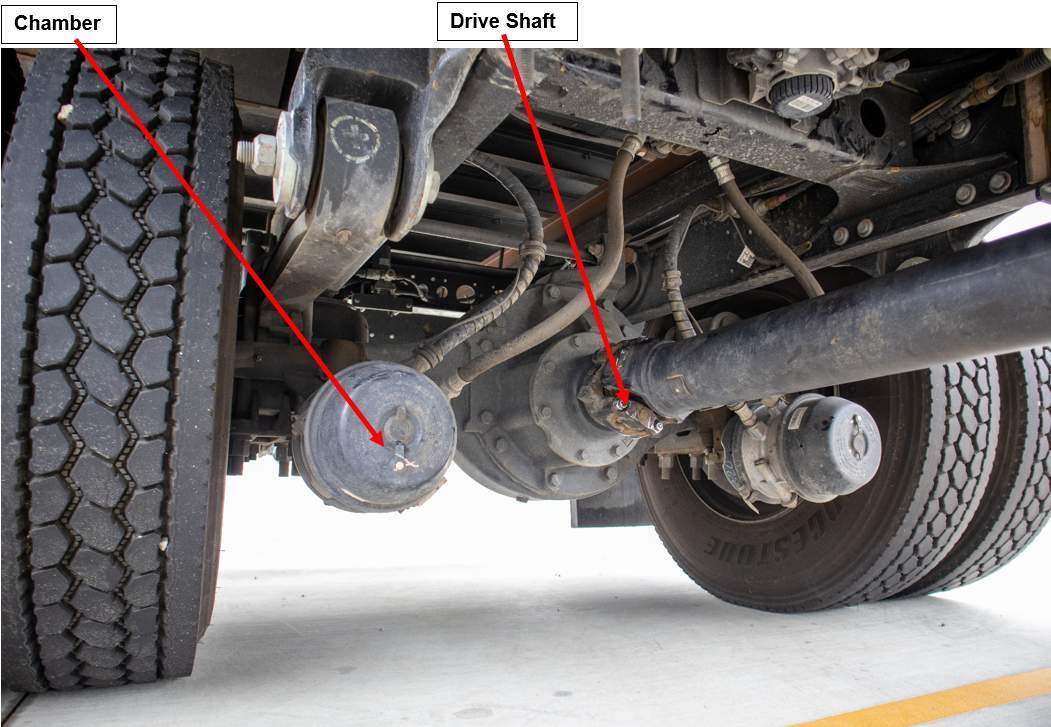
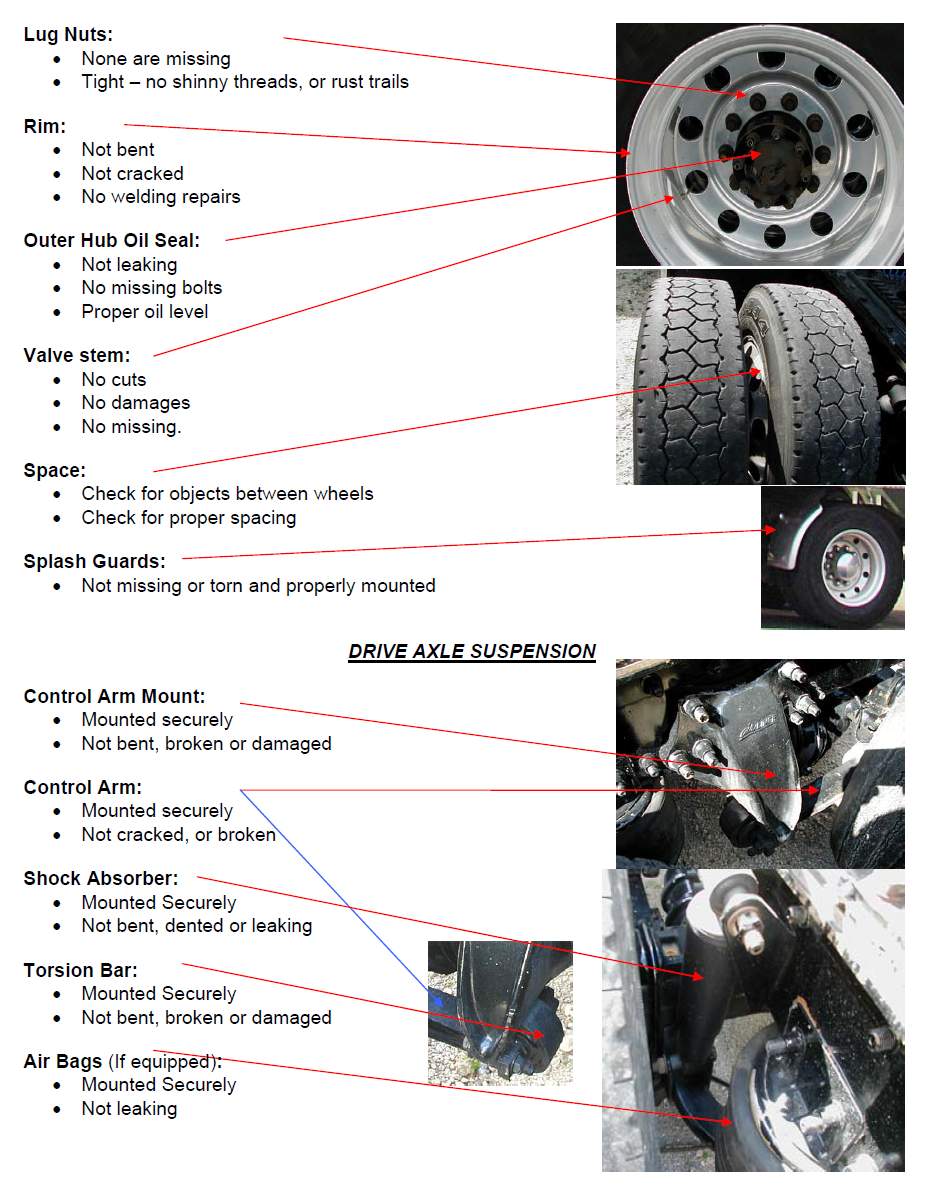
Rear Drive Wheels

drive wheel compnents

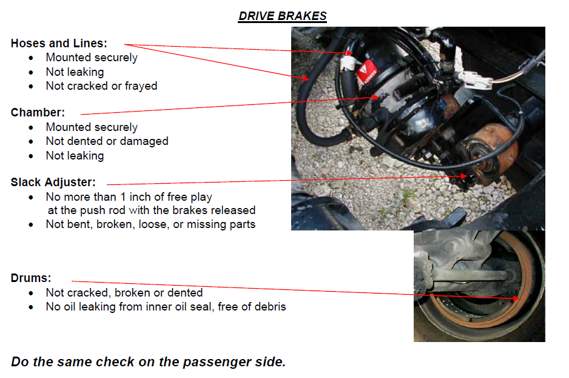
Drive Brakes

drive brakes

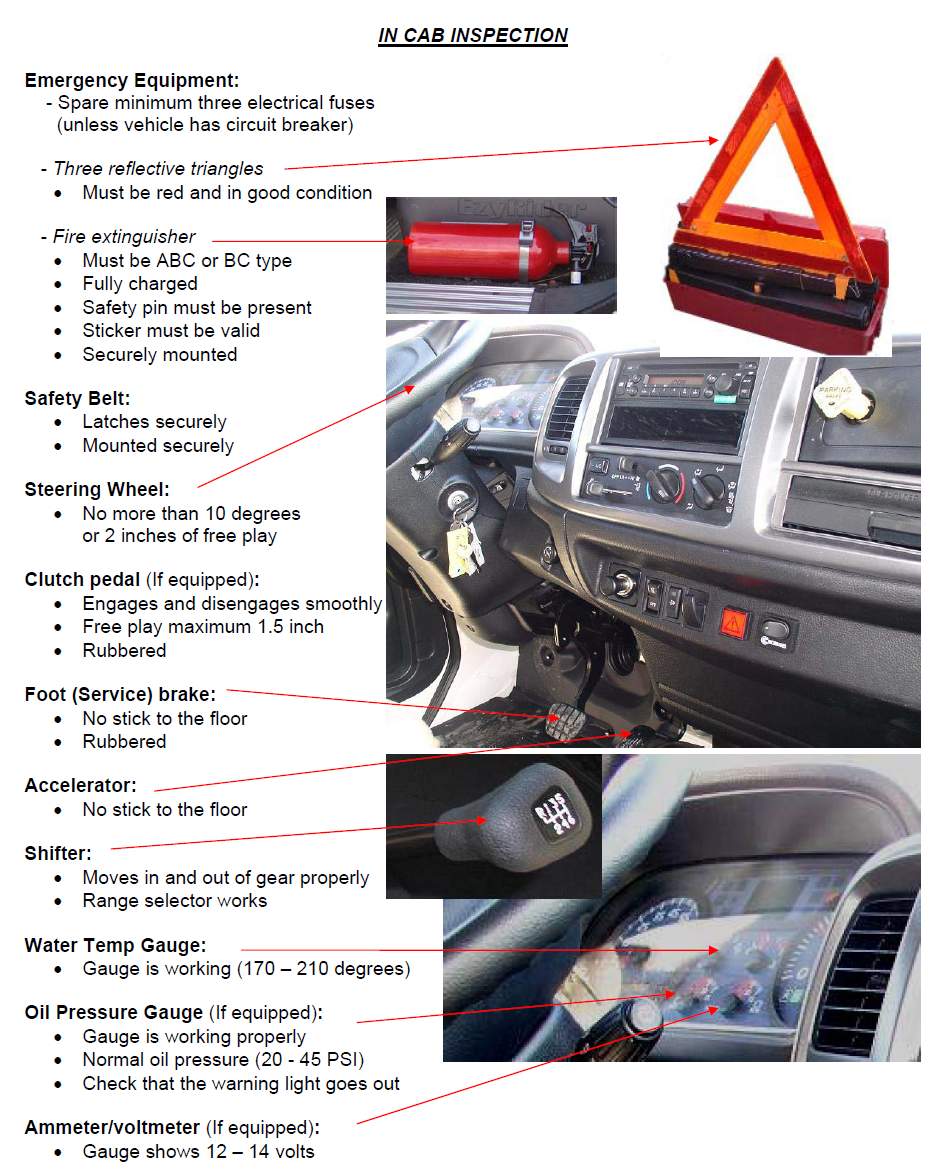
In-cab Inspection

in cab components
 
in cab components

Check Service, Emergency and Parking Brakes

NOTE: Always follow your vehicle manufacturers recommendations for service maintenance and tests .
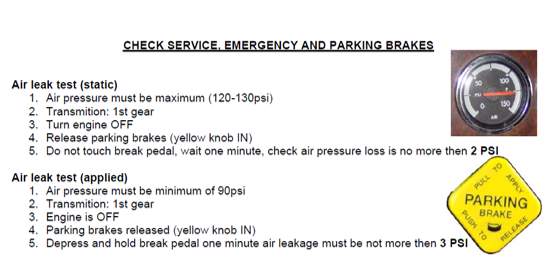
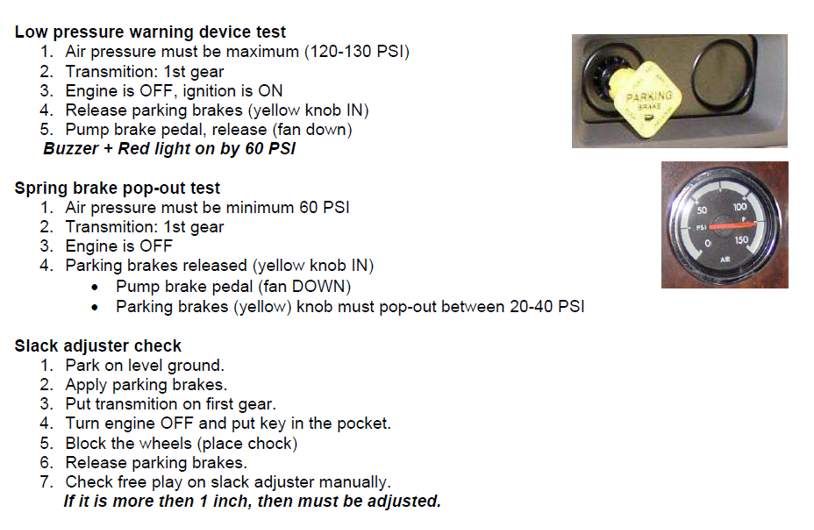
gauge and tractor brake
 
 
gauge and tractor brake

CNG vs. Diesel Box Trucks

images of differences of diesel and CNG vehicles

Remember this:

  • Always follow your vehicle manufacturers recommendations for service maintenance and tests.