
Overview
Welcome to the High Volume Events Best Practices course! As a carrier hauling loads for Amazon, you will find that throughout the year, we will experience peak periods. As customer orders increase so too does the demand for transportation. By planning ahead and implementing the best practices shared in this module, you can be better prepared for these periods while staying safe and delivering smiles to Amazon customers.
Please Note: All courses referenced in this course are linked within the Resources section at the end of the module.
Time
This course will take approximately 15 minutes to complete.
Navigating This Course
This course is mobile friendly. You can take it on your phone or on a computer. Select the cards below for tips on taking this course on your phone.
Click the magnifying glass icon (+) to zoom in and click again to return to normal size.
When you see a "CONTINUE" button, select it to unlock the next section of the course.
Rotate your phone for better access to course content.
Safety First
Disclaimer
As a carrier, you should ensure that you comply with all safety regulations required by law and put in adequate processes to help prevent or reduce the risk of incidents within your operations. This course does not relieve you of your legal responsibilities (e.g., required safety courses, following local regulations, and guidelines).
Key Takeaways
Best safety practices to prepare for high volume events.
- Best safety practices to execute during high volume events.
- Suggested courses related to these practices.
Safety First
Safety is a high priority at Amazon Transportation Services. Please review the following tips for in the yard and on the road to get started!
In case of emergency we recommend following the safety checklist below:
- Remain calm.
- When safe and able to do so, pull over to an area that is away from the flow of traffic.
- Turn on hazard lights as needed.
- Check for injuries.
- Call 911 and notify authorities.
- Place warning devices (triangles) in the designated places.
NOTE: This should happen within 10 minutes of the incident occurring.
- Call the on-duty supervisor.
- Use the callback feature on the Relay Mobile app to speak with Amazon personnel to report the crash. You will be transferred to Accident Reporting Center (ARC) to provide information.
- Be prepared to provide the following items to the responding officer:
Driver’s License
Proof of Insurance
Follow all instructions provided by the responding officer, as well as your on-duty supervisor.
Safety in the Yard
Review the following 5 tips to learn about how to operate in a safe manner in Amazon yards.
Press each card below to learn more.
Yard Safety Rules
Understand and follow the yard safety rules.
PPE
Wear your Personal Protective Equipment, consisting of a high visibility vest and safety shoes.
Report Hazards
Please report any hazards (such as faulty equipment) and safety incidents immediately to the nearest TOM associate.
Speed
Always obey speed limits. Operate the vehicle with caution and be prepared to stop for people.
Walking
Ensure you are visible while walking, and use the designated routes.
Please review the Amazon Yard Safety course in the Relay Learning Center for more information.
Safety on the Road
Review the following tips to be safe on the road.
- Prepare the vehicle: Ensure you are taking time to do a pre-trip inspection on your vehicle and/or trailer.
- Dress for the weather: Wear appropriate clothing for weather conditions along your route.
- Operating in winter weather conditions: Check the weather forecast before heading out. If it is not safe to drive, stop in a safe place.
- Avoid driving fatigued: If you notice any symptoms such as feeling tired/uncomfortable, having difficulty with concentrating, heavy eyelids or nodding your head: you should take a break.
In case of an on-road safety incident, please call 911. When it is safe to do so, you should request a callback from ROC within the Relay Mobile app, who will coordinate with the Accident Reporting Center (ARC) for any necessary recovery operations and provide instructions to you on next steps.
Performance Best Practices
Let’s take a look at some best practices to minimize disruptions through capacity planning and load execution efforts!
Key Takeaways
Best performance practices to prepare for high volume events.
- Best performance practices to execute high volume events.
- Suggested courses related to these practices.
Driver and Capacity Planning Best Practices
Press the arrows below to learn more.
Driver and Capacity Planning Best Practices (Continued)
5. Assign your company’s drivers at least 12hrs prior to the scheduled arrival time. Ensure your company has a back-up plan in place for last minute call offs to include extra drivers and/or vehicles in preparation for unexpected mechanical breakdowns or call offs.
6. Anticipate road conditions and plan driver schedules to mitigate Hours of Service (HOS) and On Time delays. Review tips in the courses Avoid Hours of Service Violations.
Confirm Load Specifics
Only book work your company can confidently execute. Review all load details prior to booking such as Driver Type (Solo vs Team), Equipment Type requirements, Scheduled Arrival Time, Rate, Domicile, etc.
Learn more best practices on these topics in the courses Understanding Relay Trips, and, Confirming Load Specifics.
Preventative Maintenance
In addition to familiarizing themselves on safety and performance best practices, we encourage carriers and drivers to ensure their fleet is ready for the increase in volume.
Key Takeaways
- Best preventative maintenance practices to prepare for high volume events.
- Best preventative maintenance practices to execute during high volume events.
- Suggested courses related to these practices.
Preventative Maintenance
Taking proactive measures to ensure your fleet is in good working order can prevent over-the-road mechanical breakdowns. Not only do these defects mean potential downtime of equipment and drivers, the delays can impact your Relay Performance Score and our ability to fulfill Amazon’s customer promise.
Stay ahead with these vehicle maintenance best practices:
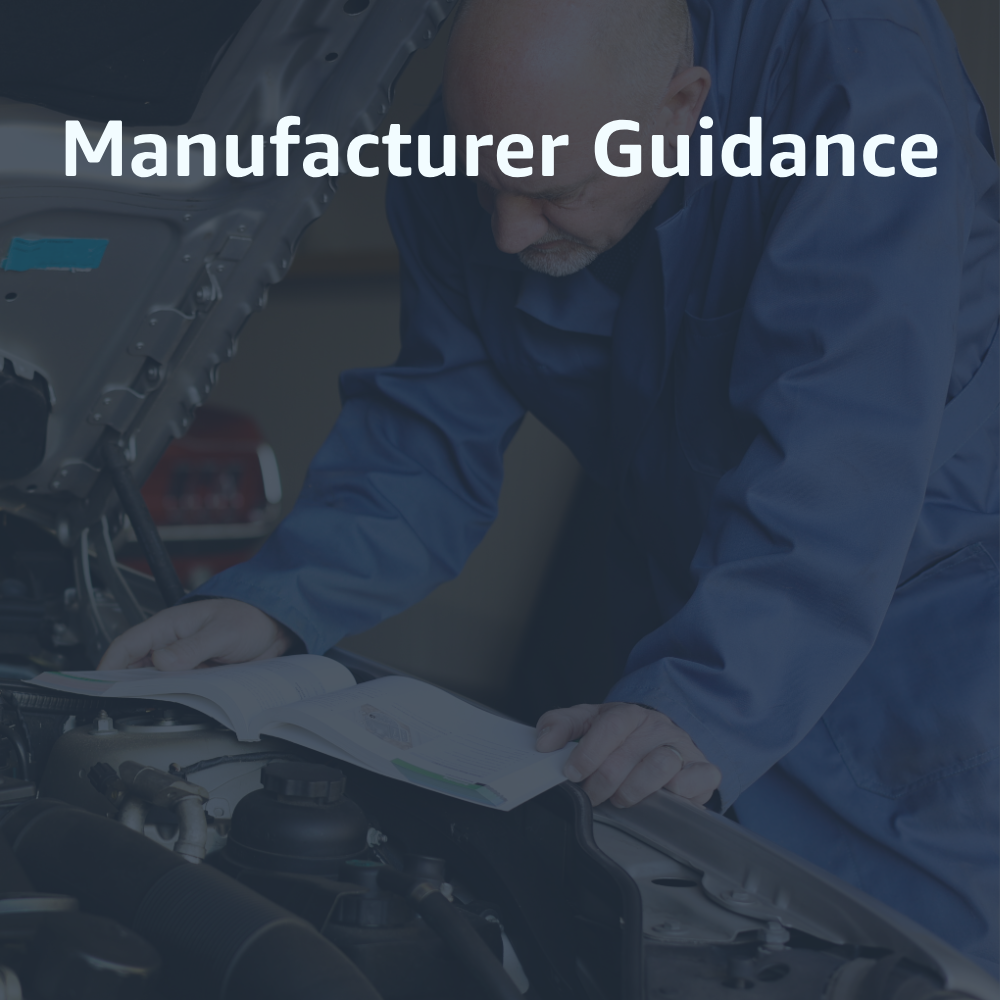
Follow Manufacturer Guidance:
Follow the equipment manufacturer’s recommended maintenance guidelines, including service schedules and changing vehicle components at recommended intervals.
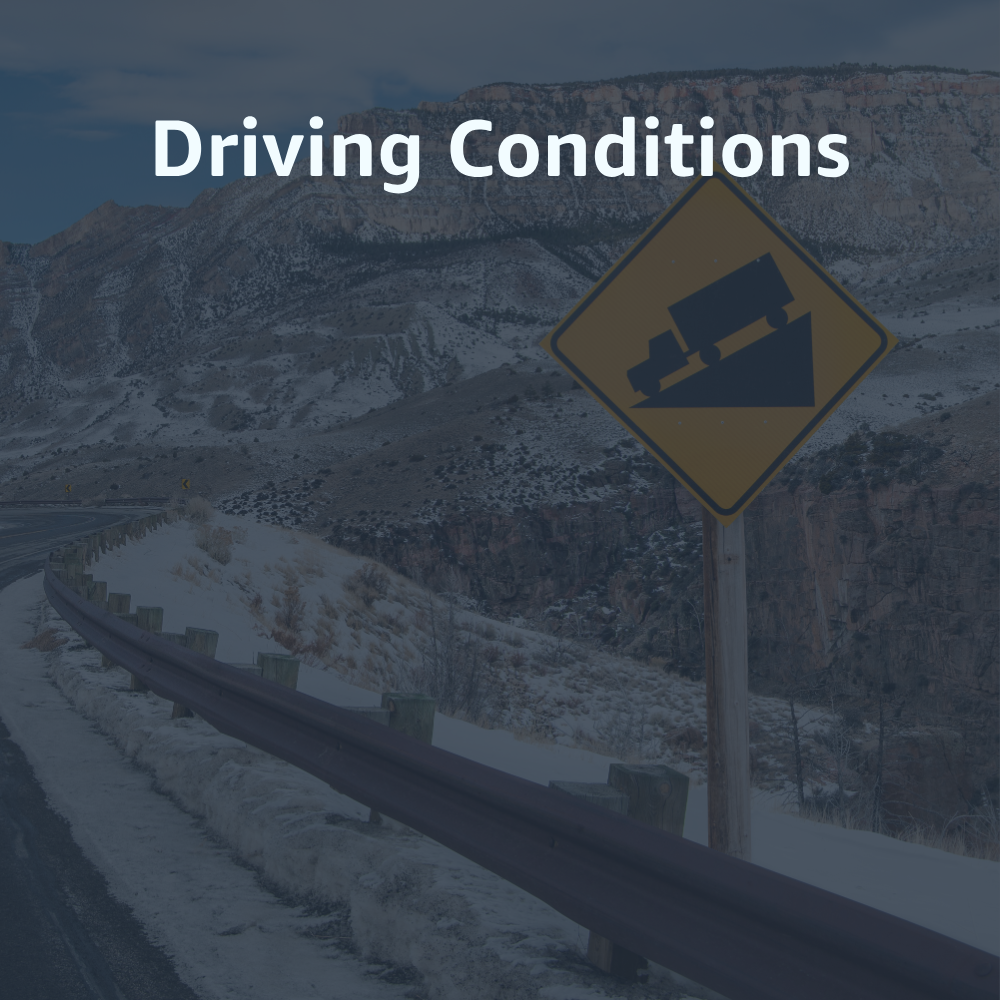
Driving Conditions:
Keep in mind that certain driving conditions, such as fluctuating traffic speeds, mountainous roads, and adverse weather, may mean the vehicle needs maintenance more frequently.
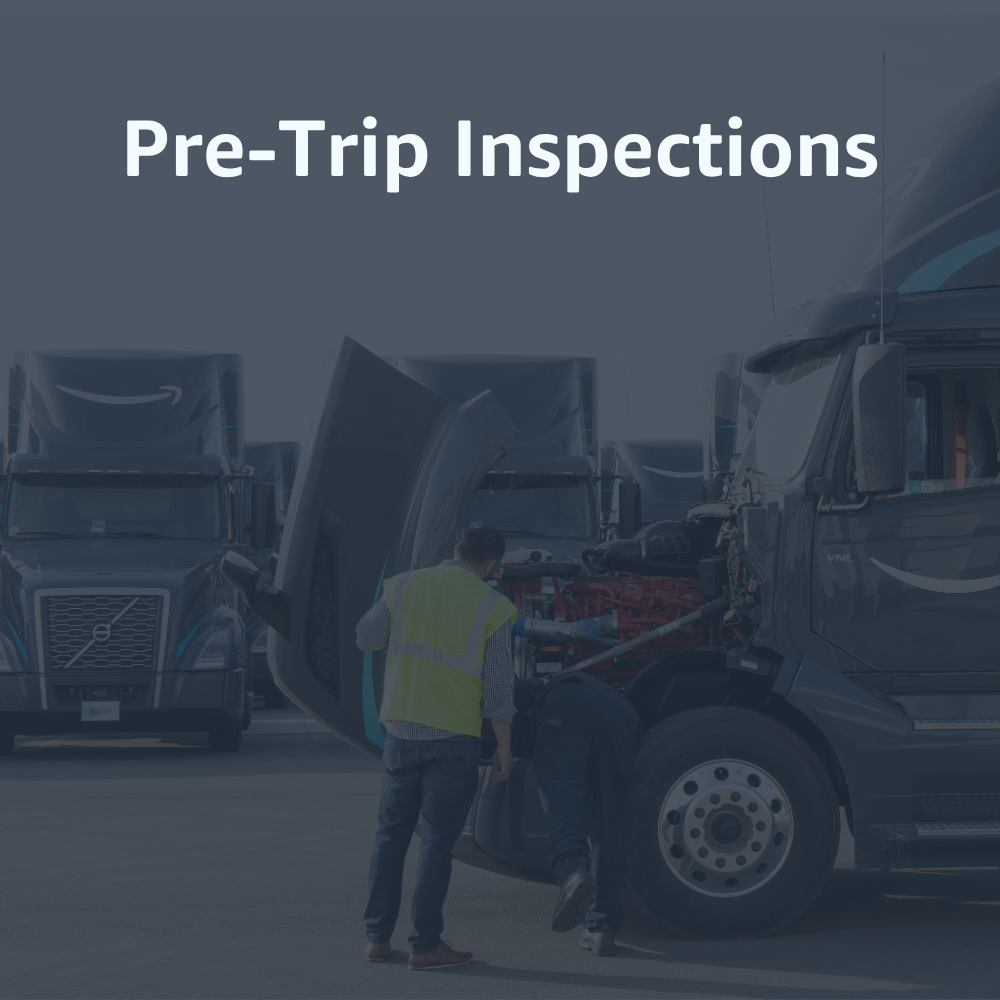
Pre-Trip Inspections:
Complete thorough pre- and post-trip inspections to identify potential maintenance issues. Many defects can be identified via an inspection which will allow your company to stay on top of employee safety and vehicle maintenance. If you notice any defects with Amazon equipment, be sure it’s noted on the Driver’s Vehicle Inspection Report (DVIR) in the Relay Mobile app.
According to a 2024 survey conducted by Amazon, the top reasons for mechanical rejections by Relay carriers were engine, tires, lights/electrical, and brakes/airlines. We recommend the following courses to learn more about best practices related to these specific vehicle components (links can be found in the resources section at the end of this course):
- Preventative Maintenance: Filters
- Preventative Maintenance: Fluids
- Tire Preventative Maintenance
- Pre-Trip Trailer Inspection – Tires & Brakes
- Trailer Lights and Landing Gear
- Brakes Best Practices
Resources
Resources Review
This course will cover how to reject at the Load and Block Level. Understanding rejection lead times and how it impacts the Relay Acceptance Score.
CA Relay – launching soon, keep an eye out in Relay Learning Center!
In this course, we review five common rejection reason codes for work booked through the Relay Load Board. These rejections may lead to a negative impact on the carrier’s Relay Performance Score. It is a best practice to check the details and know the load specifics before confirming booked work.
US Relay
CA Relay
Thank you for finishing the High Volume Events Course
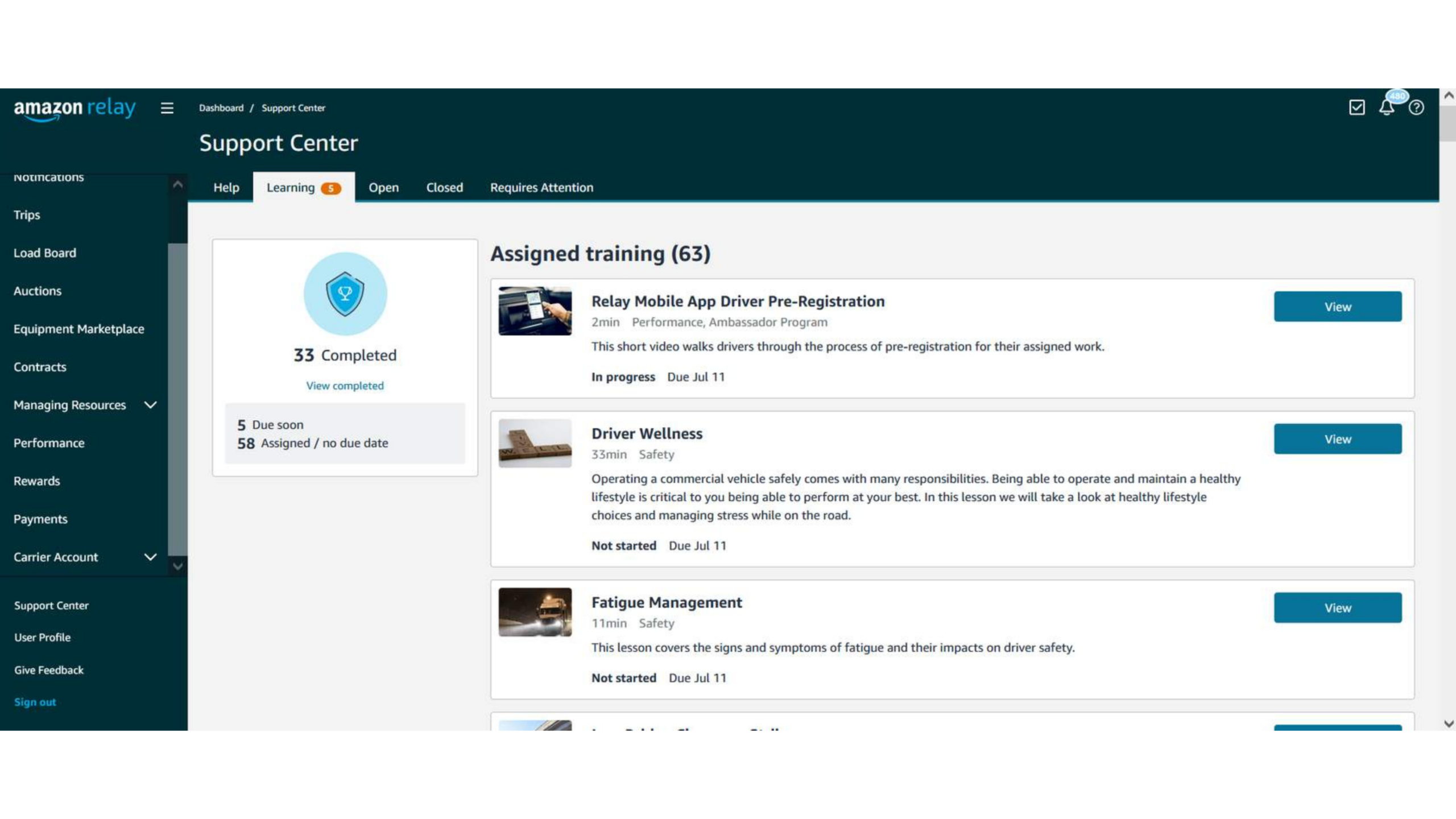
You can review and revisit this course at any time by navigating to Support Center → Learning → View Completed.